
Collective Bargaining 2026
When ETFO served the provincial government and employer bargaining agencies with notice to bargain in June 2026 in advance of collective agreements expiring on August 31, we kickstarted a bargaining round we knew would be shaped not just by classroom realities, but by a series of contentious political choices made at Queen’s Park. Collective bargaining is how educators defend their rights, protect their working conditions and fight for the investments, resources and supports students deserve. It’s also one of the few times when the government must sit across the table from the people who live with the consequences of its decisions.
As bargaining continues, it’s important for you, as a member, to understand the process, the political landscape we’re navigating, and what you can do to support your colleagues, students and union.
Bargaining: Where We Are and How We Got Here
While bargaining takes place every three years (on average), the work of ensuring we are prepared to represent members’ interests at the bargaining table never really stops.
Earlier this year, the provincial Executive travelled across Ontario to host stewardplus- one meetings, bringing together thousands of members across the province. Educators shared candid stories about workload, student needs and daily classroom realities. ETFO released officers, including your provincial president, first vice-president and two vice-presidents, also met with local executives to gather insights from every region. All-member meetings in May and June engaged members in important discussions ahead of negotiations. These conversations helped further ground ETFO’s bargaining strategy in lived experience.
This frontline outreach complemented the information gathering that began in spring 2025, when ETFO launched a comprehensive effort to gather member input on key bargaining issues through an all-member online survey and a random telephone survey. Thousands of ETFO’s 84,000 members contributed, sharing what matters most in their classrooms and workplaces. The conversation continued in fall 2025, when member focus groups provided deeper insight into the challenges educators are facing and the solutions they want to see at the bargaining table.
The Collective Bargaining Standing Committee, which is made up of members from each ETFO bargaining unit type (teachers, occasional teachers, designated early childhood educators, education support personnel, professional support personnel) carefully reviewed the survey results, focus group feedback and research findings (with data compiled and analyzed on ETFO’s behalf by research firm Stratcom). From this work, they developed draft central bargaining goals, which were then moved through ETFO’s democratic structure for review and approval.
ETFO’s goal-setting process is both rigorous and democratic. Every step is designed to ensure that when ETFO sits down at the bargaining table, we do so with a clear mandate that reflects the voices, experiences and priorities of our members.
At their January 2026 meeting, the ETFO provincial Executive reviewed the draft bargaining goals to ensure they aligned with ETFO’s broader priorities and the current educational landscape. Next, the goals were brought to Representative Council, the body made up of leaders from every ETFO local across the province. At its meeting in February 2026, Rep Council approved the following goals:
2026 Teacher/Occasional teacher bargaining goals:
- Smaller class sizes
- Classroom complexity/composition
- Enhancements to health and safety protections
- Improvements to compensation
- Job security and hiring practices
- Improvements to workload/working conditions
2026 Education worker bargaining goals:
- Smaller class sizes
- Enhancements to health and safety protections
- Improvements to compensation
- Job security
- Improvements to workload/working conditions
These goals are rooted in the daily realities educators face and in the political decisions that have created those realities. They reflect what educators have been saying for years: they are stretched thin, student needs are increasing and becoming more complex, and chronic underfunding by the provincial government is creating dire conditions in Ontario’s public schools.
The Political Reality: A System Under Strain
Ontario’s public education system is approaching a state of crisis after years of deliberate underfunding by the provincial Conservative government, which seems intent on increasing the privatization of public schools.
Since 2018, the gap between what schools receive and what they actually need has grown dramatically. According to the Canadian Centre for Policy Alternatives, the shortfall is now $6.5 billion, when inflation and enrolment growth are factored in. That’s not a minor discrepancy; it reflects political decisions with real consequences resulting in a funding gap of more than $3,100 per student.
Cuts Where Students Need Support Most
Educators see the consequences every day in large, more complex classes, fewer supports for students with special education needs, reduced funding for equity and inclusion initiatives, and rising workloads and stress.
Funding reductions have hit students who are most vulnerable the hardest. Cuts to special education, equity initiatives and mental health supports undermine the foundation of inclusive public education.
Educators know that student success requires stable, predictable investment, not one-off announcements or temporary fixes. But instead of addressing systemic needs, the Ford government has leaned on short-term measures.
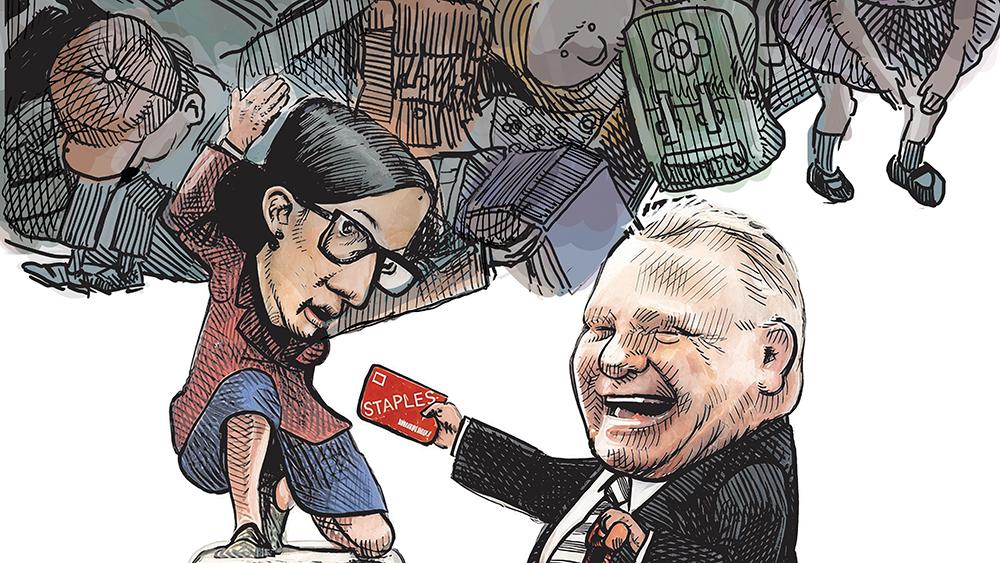
A recent example is its $750 classroom supply fund. While any support is welcome, educators immediately recognized the problem. A limited, one time fund does not address chronic underfunding. Worse, boards must cover part of the cost from their own budgets, which puts even more pressure on already strained resources. Put simply, it’s political theatre unworthy of ovation.
What members consistently emphasize is the need for long-term, dependable investment, not temporary measures. ETFO’s position is clear. The issue isn’t the availability of resources; it’s the government’s misguided priorities. Our plan during bargaining is to remind them that all Ontarians, including the students we serve, deserve investment and support.
smaller classes. BIG DIFFERENCE
Class size isn’t just about numbers. When one teacher is faced with managing a class of 30 (or more) students, safety, attention and learning are all affected. Large classes also lead to teacher burnout and drive educators out of the profession. Classes with fewer students are safer, quieter and more inclusive, which helps reduce violence in schools. They support stronger relationships and better collaboration between students and educators. And, smaller classes boost job satisfaction, which is critical to addressing Ontario’s retention and recruitment crisis.
Recognizing that smaller classes are a key concern for members, in addition to bringing this issue to the bargaining table, ETFO launched a multifaceted public campaign called “smaller classes, BIG DIFFERENCE” to support bargaining and raise awareness of the impacts of large classes on students and educators.
Keep an eye out for ETFO’s TV, radio, social and digital media ads, billboards and cinema ads this fall and throughout the year. Our campaign is one way we are setting the stage for bargaining conversations, mobilizing parents and the public and pressuring the government to bargain fairly with educators.
Moving Forward with Collective Action
Collective bargaining outcomes are influenced not only by what happens at the table, but by the strength, unity and visibility of members behind the scenes, in every corner of the province. When educators are connected and engaged, their collective voice cannot be ignored.
In the lead up to bargaining, ETFO locals and members were active across the province throughout the spring and summer. Members raised awareness about the need for smaller classes and adequate funding for public education through a number of actions:
1. Legislative petition - Over 55,000 petition signatures were collected from every corner of the province and presented at Queen’s Park by opposition MPPs.
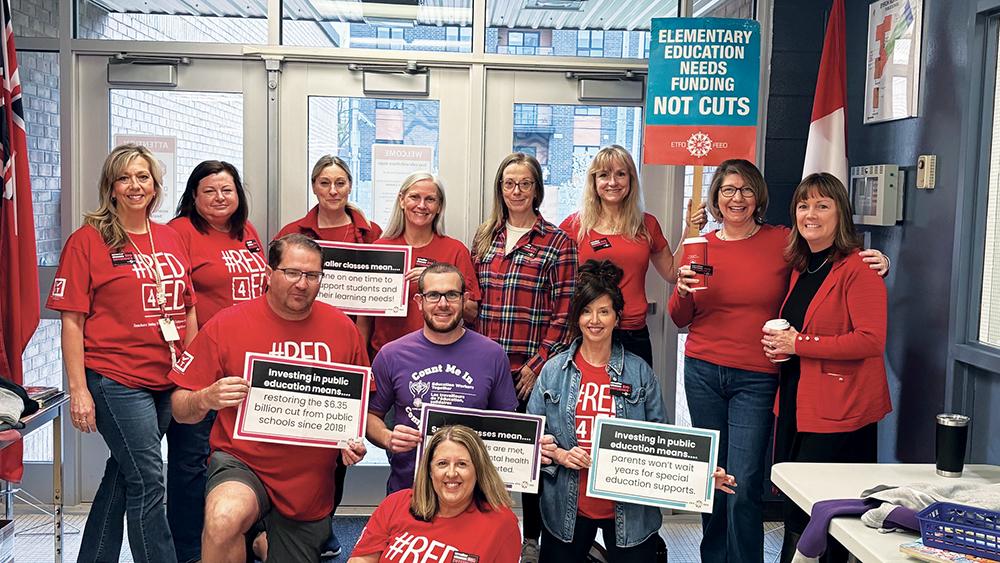
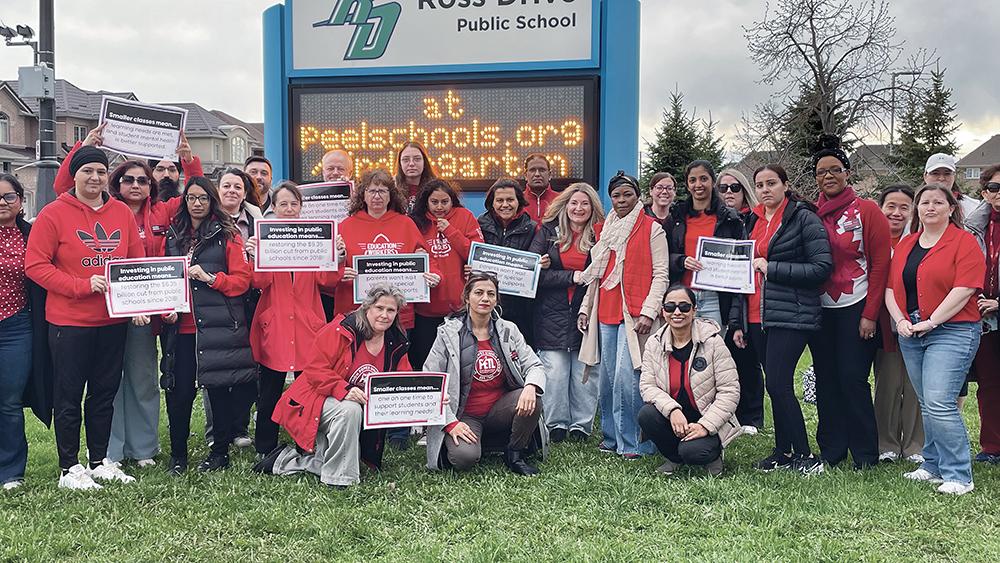
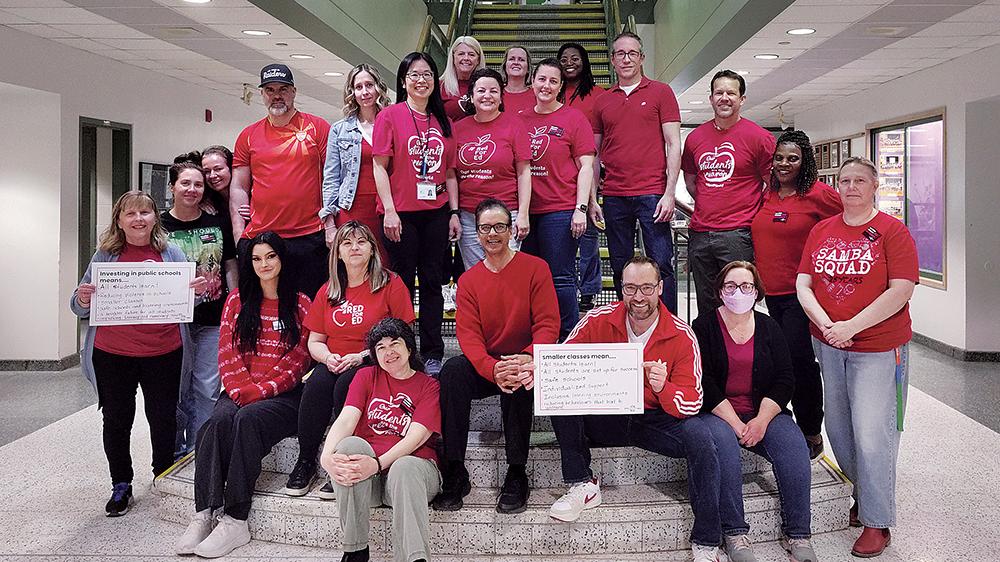
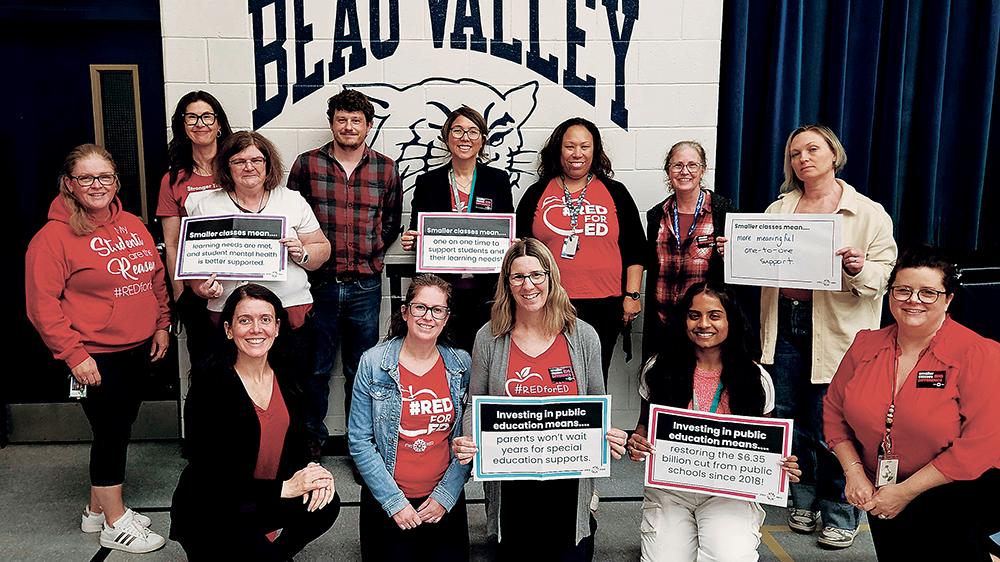
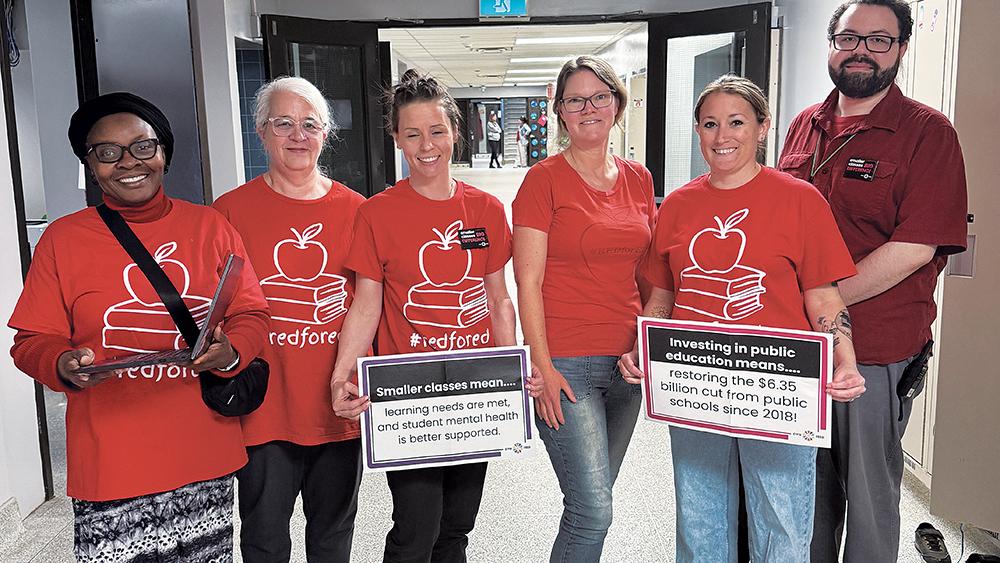
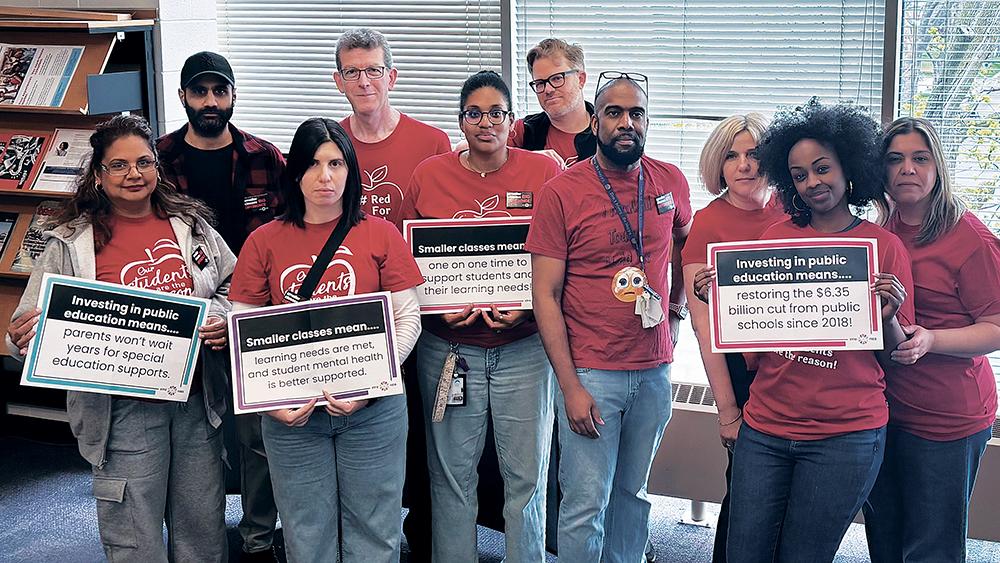
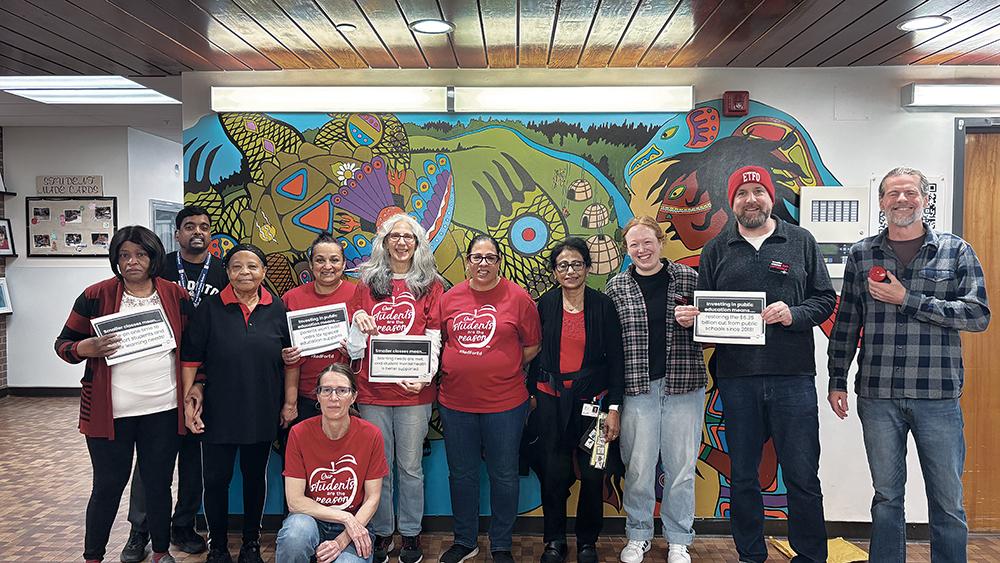
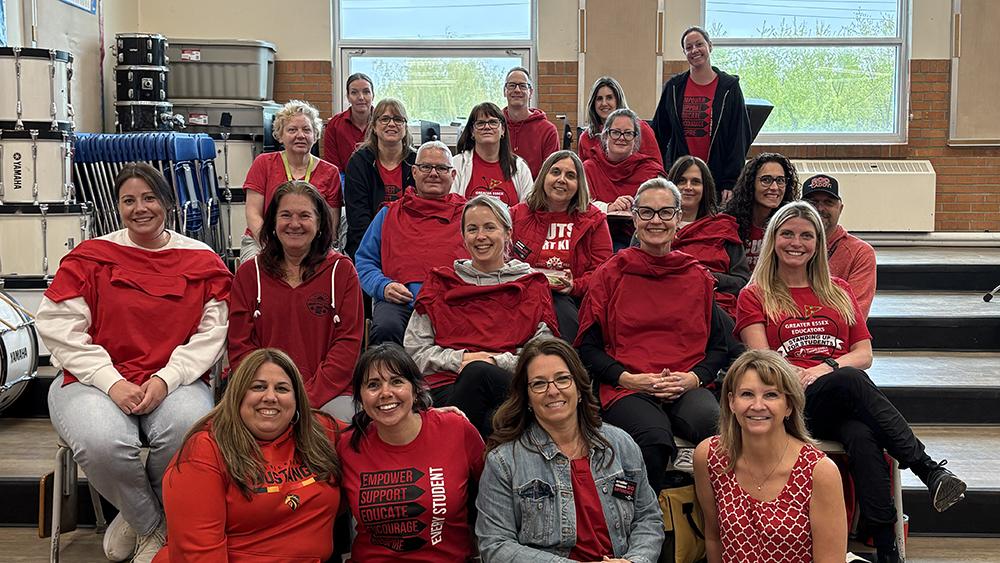
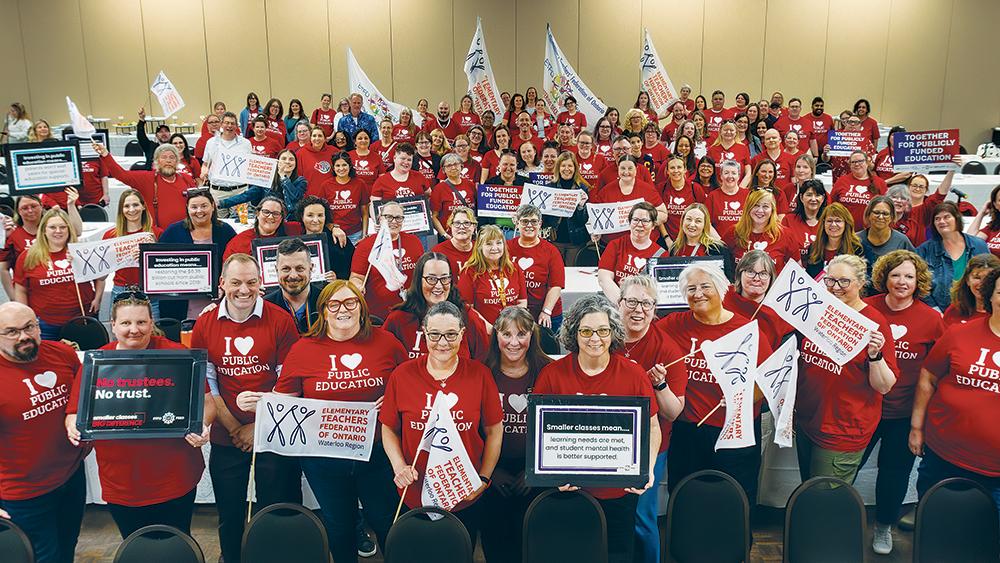
2. Province-wide day of action – On April 29, ETFO members joined the affiliate unions to demonstrate our strength and support for collective bargaining. More than 275,000 members across the province wore red and purple in a powerful show of solidarity.
3. Community postcard campaign – In June, ETFO collected thousands of postcards sharing widespread public concern about public education and demanding that the government take action.
4. Community outreach – In August, ETFO sent a mailer talking about the issue in public schools and what educators are bargaining for to every household in the province. Members have also been knocking on doors and attending local festivals and events to talk with communities about the needs of public schools.
All these efforts – listening tours, leadership and member engagement, joint affiliate actions, mobilization initiatives and public campaigns – have a shared goal: building union power to show the Ford Conservative government that we are standing together for publicly funded education.
You Are ETFO's Strength
This round of bargaining isn’t just about wages or working conditions; it’s about the future of public education in Ontario. ETFO members are facing a government that undervalues educators at every turn. But we’re here to remind them that we will do everything we can to defend Ontario’s public schools.
ETFO’s ask of you is this: stay informed and engaged. Get involved in upcoming actions with colleagues at your school or work site. Have conversations with neighbours and community members. Encourage others to join us in demanding a strong, adequately funded public school system.
By standing strong in schools and communities across Ontario, ETFO members have the power to protect and strengthen public education for generations to come. We will do it, and we will do it together.
Gail Bannister-Clarke is a member of ETFO’s Collective Bargaining staff.