Critically Thinking About Sustainability
As we become more aware of the environmental and social impacts of our choices, it’s easy to feel that every purchase or action is a vote for the future we want. Yet for decades, major polluters have promoted the idea of a personal carbon footprint to make individuals feel responsible for a crisis driven by large-scale extraction and production. While we debate paper or plastic straws, those systems continue largely unchanged. In a globalized economy, and in our desire for simple solutions, we often overlook the true complexity of sustainability.
We regularly face everyday sustainability dilemmas: hand dryers or paper towels, local or imported foods. A reusable bag, for example, requires far more energy and emissions to produce than a single-use plastic one. Even our bigger decisions come with trade-offs. Electric cars may seem like a clear solution, but what about the battery? As data scientist and sustainability researcher Hannah Ritchie points out in her book How to Be the First Generation to Build a Sustainable World (and in her excellent blog Sustainability by the Numbers), many of our assumptions are shaped by “zombie facts” that refuse to die.
The claim that EV batteries can’t be recycled is one such myth. While electric vehicles do have a higher carbon cost at production, by their second year on the road they typically outperform gas-powered cars, especially in regions with cleaner electricity grids like Ontario. And sometimes, the most sustainable vehicle is simply the one you already own, since its manufacturing emissions are already accounted for.
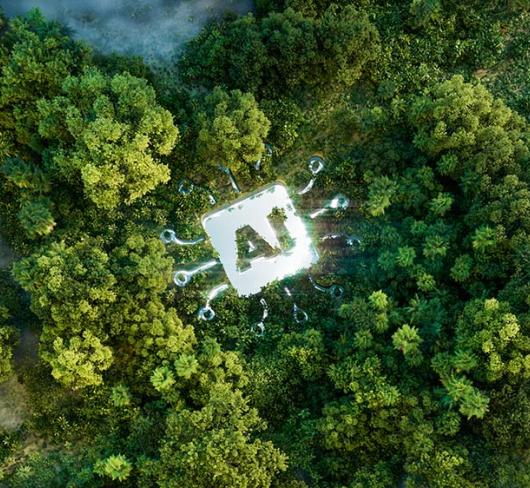
The same logic applies to our digital choices. A few artificial intelligence-powered searches use less energy than streaming a movie at home, and both activities produce far fewer emissions than eating beef. In burger terms, a year of daily AI use equals roughly five burgers, while a year of daily video streaming is closer to hosting a single 20-burger backyard BBQ.
The point isn’t to use AI freely (especially after you hear from the neighbours who are being pushed or polluted out to make way for data centres), but to bring attention to scale, and to remember that what we eat carries a much larger footprint than what we click.
True sustainability is less about making the “right” choice every time and more about applying a critical lens to each decision. The Sustainability LENSE framework offers one way to assess the life cycles, energy use, local impacts, scale and equity behind our choices.
Much of this perspective is shaped by Ritchie’s work, which I highly recommend not only for personal reflection but also as a classroom read. Her data-driven approach connects beautifully to math, science and geography, turning charts, graphs and realworld statistics into meaningful conversations about what sustainability really means in a quickly shifting global supply chain. Ritchie helps us see which choices we can stress less about (like how we dry our hands) and where our decisions truly make a difference (like what we eat).
The Sustainability LENSE Framework
Sustainability isn’t a checklist of right or wrong choices; it’s a way of seeing. The Sustainability LENSE is designed to help us pause, ask sharper questions and weigh the systems behind each decision. It helps us look more closely at how our choices connect to larger systems.
L: Life Cycle
What’s the full story of this product? What resources were extracted to produce it, and what happens when I’m done with it?
Every item has a lifespan, from extraction and production to use and disposal. Those rollerblades you threw out when you were a teenager? They likely still exist in a landfill somewhere. Considering the full journey of an item exposes hidden environmental costs behind everyday products.
Example: Research from Our World in Data (ourworldindata.org) shows that replacing beef with chicken offers one of the most impactful single swaps in a diet, more than switching from eating chicken to being vegetarian. Cattle require enormous amounts of feed, land and water throughout their lives. They also release methane as they digest, a greenhouse gas far more potent than carbon dioxide. By comparison, chicken needs far less land and feed per kilogram of protein, and tofu’s production involves no methane at all. The difference isn’t just what we eat, but what it takes to grow and sustain it.
E: Emissions and Energy
How much energy does it use throughout that life cycle, and where does that energy come from?
This varies widely by source country. For instance, an item produced in a Canadian electricity grid, powered predominantly by low-carbon-emitting hydro and nuclear, has a much smaller impact than in China, which, despite being a leader in renewable capacity, still gets about 60 per cent of its electricity from coal. The same product can carry a completely different footprint depending on where it’s made.
Example: Streaming a two-hour film might produce less than 200 grams of carbon dioxide, but training large artificial intelligence models can require thousands of times more energy, particularly when powered by fossil grids. “Digital” doesn’t mean emission-free, it simply shifts the emissions upstream to servers, cooling systems and the electricity that keeps them running.
N: Neighborhood (Local) Impacts
Who and what is affected nearby? How does this production shape local ecosystems and communities?
Every supply chain touches real places and people. Understanding local impacts helps reveal who pays the unseen costs of global consumption.
Example: Fast fashion factories, concentrated in regions with weak environmental protections, often release chemical dyes and microplastics into local waterways. Many benefit from cheap and trendy clothes, yet the local health and ecological costs are intentionally veiled. Buying less, choosing ethical fashion and supporting circular design cycles recognizes the people and ecosystems behind every garment.
S: Scale and Frequency
How big is this impact when multiplied across society? How often does it occur?
Some actions matter less individually but add up collectively. Recognizing scale helps identify where systemic change has the greatest effect.
Example: Transportation is one of the largest sources of emissions in Canada. While a single long-haul flight emits more carbon per passenger than a year of public transit commuting, it’s our everyday systems, including millions of solo car trips, which carry the real weight. Building reliable, affordable and frequent public transit doesn’t just reduce emissions, it improves air quality, creates good jobs and ensures equitable access to mobility.
E: Equity
Who benefits, who bears the cost, and whose voices are missing?
True sustainability includes fairness and accountability. Communities near extraction, data centres, or processing plants often face the greatest environmental harm while gaining the least benefit.
Example: In northern Ontario, the De Beers Victor diamond mine operated for years near the Cree community of Attawapiskat, extracting billions in diamonds while residents lived under long-term boil-water advisories. Diamond mining leaves behind altered waterways, chemical runoff and land that can take generations to recover. A reminder that those most affected by extraction should be engaged in decision-making, benefits and restoration throughout the process.
The Sustainability LENSE isn’t about finding perfect answers, it’s about developing the habit of sustainable thinking. By considering life cycles, energy, local impacts, scale and equity, we shift from reacting to reflecting, making decisions rooted in understanding rather than assumption.
Seven Generation Thinking
The Haudenosaunee Confederacy, one of the oldest participatory democracies on Earth, teaches a principle known as Seven Generation Thinking, the idea that the decisions we make today should serve not only ourselves or our families, but also the seven generations to come.
At first, seven generations may sound distant, but it isn’t. If you’ve met your great-grandparents and might one day meet your great-grandchildren, that’s seven generations in a single lifetime.
This perspective reframes sustainability not as a technical problem to solve, but as an intergenerational relationship to nurture. It reminds us that the ways we teach, vote and care for the land influence generations yet to come, and that climate action cannot rest on individual behaviour alone.
From Individual Guilt to Collective Responsibility
Environmental challenges are deeply interconnected, and so are their solutions. History shows that smarter systems, not simply stricter habits, drive the biggest gains. Over the past century, advances in farming have tripled or even quintupled global crop yields, feeding more people without expanding farmland, and decreasing global hunger. Better seeds, more efficient fertilizers, decreased use of pesticides and more efficient farming practices have all contributed to these agricultural gains.
In cities, investments in public transit and green infrastructure reduce air, water and noise pollution, prevent traffic deaths, reduce emissions and make neighbourhoods more livable. When one solution strengthens several systems at once, progress accelerates across them all.
Some of our intuitions about what’s “green” can be wrong. A fruit wrapped in thin plastic preserves freshness for weeks, dramatically reducing food waste and preserving its total life cycle and energy used. We would have even more food waste without the plastic wrap, producing more emissions.
Similarly, established palm oil farms (i.e., those not replacing old-growth forests) are highly efficient, producing far more oil on less land than alternatives like coconut or soybean. Replacing palm oil entirely would actually increase deforestation and emissions due to the greater land use required by any other oil.
Still, no amount of careful consumer choice can fix a broken system. The scale of transformation we need requires political, economic and technological change. A single policy shift can equal or exceed the lifetime efforts of a million individuals.
This is why civic participation matters: when citizens, workers and educators act together, governments have to listen. Let’s spend less time debating whether oat milk is greener than soy (production of any dairy alternative emits far less than cow’s milk) while runaway corporate greed prioritizes profit at the expense of people and the planet.
Real progress happens when we move in the same direction toward shared goals.
As educators, this means using our collective voice as both union members and community builders to advocate for systemic change. The fight for climate justice is also a fight for workplace safety, public infrastructure and intergenerational equity. As one of Canada’s largest unions, ETFO has the power and responsibility to lead by example, integrating sustainability into our operations, bargaining and classrooms, and proving that collective action and environmental responsibility are inseparable.
Individual action still matters. Every electric vehicle purchased, every plant-based meal served and every recycled product used sends a signal about the world we want to build. Paired with public action such as voting, organizing, bargaining, and educating, these choices grow into the collective hope that drives real change.
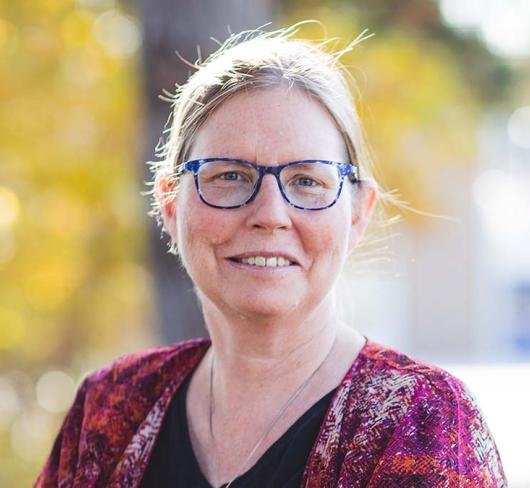
Sarah Lowes is an intermediate educator and co-chair of the ETFO Halton Climate Justice Committee. She also serves as chair of the Canadian Teachers’ Federation Climate Working Group and is the co-founder of Locals for a Greener Future, a grassroots network of ETFO members organizing for climate action across Ontario.
Learn more or get involved at tinyurl.com/ClimateSafeSchools.