Thinking Critically
Critical thinking is a disciplined process that requires the learner to conceptualize, apply, analyze, synthesize and evaluate information gathered by observation, experience, reflection, reasoning or communication.
Teaching science and technology is an outstanding way to provide experiences that are valid, testable and repeatable.
For the last three years, Marietta (Mars) Bloch, B.Sc. (Hon), B.Ed., has co-ordinated the Toronto District School Board's science and technology programs, from grade 1 through secondary school.
Several science and technology strands lend themselves directly to outdoor experiences. Students need to be able to make observations, collect data, and test hypotheses in nature.
The statistics are in, finally proving what everyone with an arts education has long known: boys in Canadian schools are well behind girls in academic performance, particularity in reading and writing.
No one is in a better position to see the benefits of school nutrition programs than teachers.
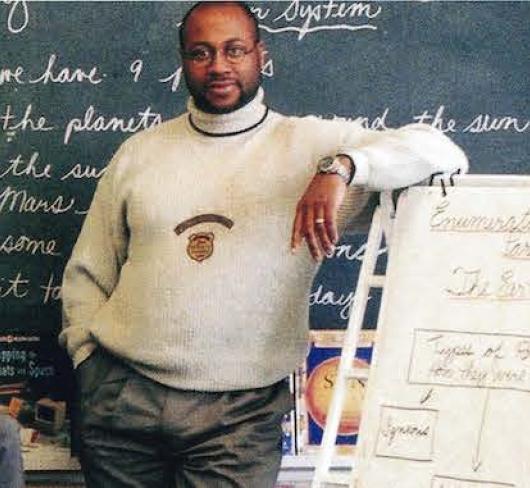
The fact is, fewer men are becoming elementary teachers. Eighteen male teachers give their insight.
This first celebratory event was initiated by the International Registry of World Citizens to celebrate the United Nations International Day of Peace.
While our teachers are away, some write wonderful letters back to us. They deserve to be shared. I hope you enjoy these excerpts and will be inspired to consider a teaching exchange at some point in your own career.