Planting The Seeds of Change
As an educator, I have always believed that teaching extends far beyond textbooks and tests. My role as a Grade 7-8 teacher at Cedarwood Public School in Markham has afforded me the privilege of shaping young minds, not just academically, but also socially and emotionally. This year, my students and I embarked on a transformative journey, one that taught us about advocacy, empathy and the pressing issue of food insecurity in Ontario.
Planting the Seeds of Advocacy
From the beginning of the school year, I knew I wanted to weave activism into our learning as a topic of study and as a way of being. I began by introducing my Grade 7-8 students to the idea that advocacy is rooted in empathy, and that even young people have the power to influence change.
We explored the concept of activism through rich discussions, stories and inquiry-based learning. We looked at historical change-makers like Viola Desmond, who challenged segregation in Nova Scotia, and Terry Fox, who turned personal struggle into national action. We also studied modern- day figures like Malala Yousafzai, who bravely stood up for girls’ education, and Greta Thunberg, who inspired a global climate movement led by youth.
Our discussions were deep and personal.
Students asked powerful questions:
- What drives someone to speak up, even when it’s hard?
- Can you be an activist if you’re quiet or introverted?
- What does real change look like?
These conversations helped students see the connection between personal values and public action. They began to recognize that advocacy isn’t limited to adults or politicians; it’s something they can do now, in their own communities.
This growing awareness created the perfect foundation for the work we would eventually do through the CBC’s Make the Season Kind challenge. When we heard about the challenge, students were eager to put their learning into action in a way that felt real and relevant. They chose to focus on food insecurity, a topic that many connected with personally.
To begin, we took time to understand the root causes of food insecurity: low wages, inflation, housing instability and systemic inequities. We studied local organizations like Second Harvest and Food Share and examined how food justice is tied to larger social issues. Students surveyed our school community to find out what kinds of foods families actually needed and preferred. This work wasn’t abstract; it was deeply grounded in care. Their advocacy was thoughtful, inclusive and culturally responsive.
By the time we began fundraising, budgeting and shopping for our project – a community “care cupboard” – my students were not only informed, they were empowered. They had moved from learning about change-makers to becoming change-makers themselves. Their work wasn’t just a project, it was a statement: We see you. We care. And we’re here to help.
Understanding Food Insecurity
December often sees increased calls for contributions to food drives and other fundraising activities as students get ready for the holiday season. But food insecurity is a constant and growing issue in Ontario and across Canada. With stagnant wages and a rising cost of living, many families are struggling to put food on the table. Food banks are stretched to their limits, serving more people than ever before, and fundraising and food drives don’t address the underlying issues.
I wanted my students to understand the complexity of food insecurity – not just as a distant societal problem, but as a challenge faced by families in our own community – and to think about how to address both the immediate needs and the systemic issues.
We began with a simple but powerful question: What does it mean to be food insecure? Most students initially thought it referred only to people who are homeless or living in extreme poverty. But as we unpacked the term through articles, videos and discussions, they were shocked to discover that food insecurity includes working families who simply can’t keep up with the rising cost of living.
The idea that their own peers or neighbours might be skipping meals made the issue feel real and urgent. We examined current data on food insecurity in York Region, learned about the impact of inflation on grocery prices, and explored how factors like housing costs, precarious employment and systemic inequities contribute to the problem. We also investigated how food banks are overwhelmed, and how short-term charity solutions, while helpful, don’t address the root causes of hunger.
As a class, we asked:
- Why do food banks even need to exist in a wealthy country like Canada?
- What policies or systems make it hard for families to access healthy food?
- How can we address both immediate needs and long-term changes?
These questions became the backbone of our inquiry.
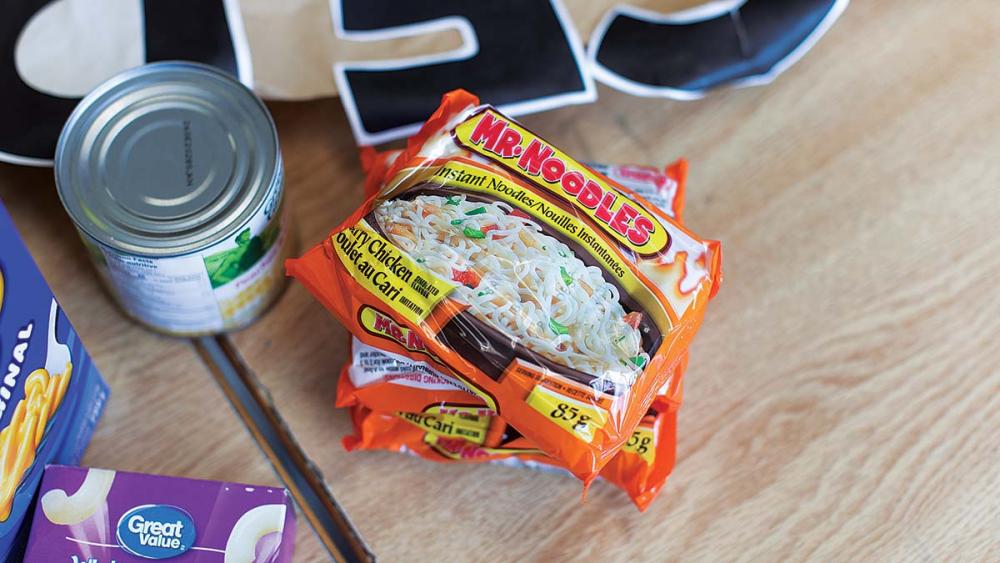
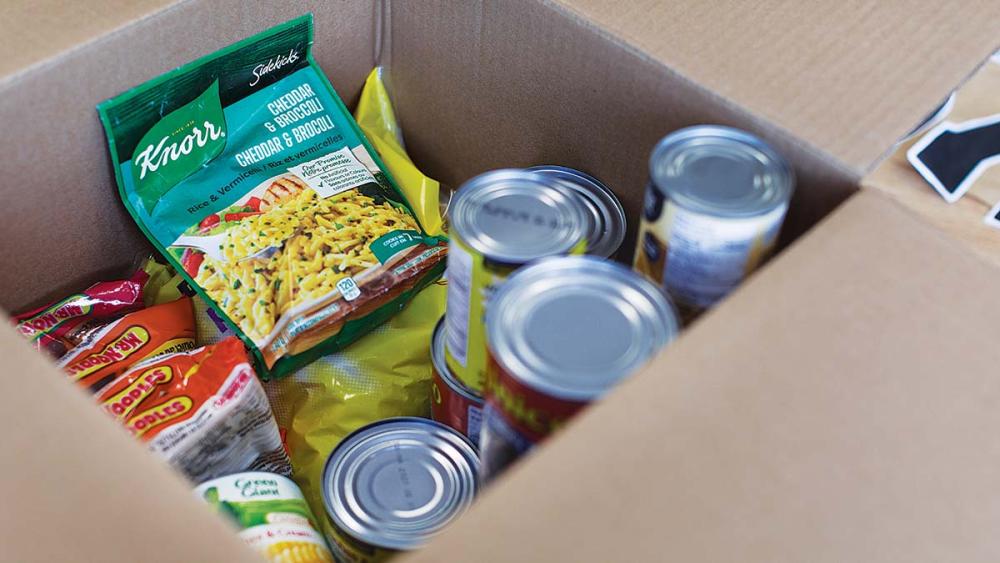
To better understand our own school community, students designed and conducted an anonymous survey to find out what types of items families actually needed. This led to meaningful discoveries about food preferences and the cultural and religious diversity of our community. We learned that many families required halal food, and that staples like rice, lentils, beans, noodles and canned/frozen vegetables were more useful than typical donation items like canned soup or pasta sauce.
This shifted our approach completely: we wanted our efforts to be respectful, dignified and culturally responsive. Through this process, students began to connect food insecurity to systemic issues. We explored how poverty is shaped by race, gender, disability and immigration status. We talked about how the lack of affordable housing, the underfunding of school meal programs and the absence of a national food strategy are policy issues, not personal failures. Students discussed the idea of food as a human right, not a privilege.
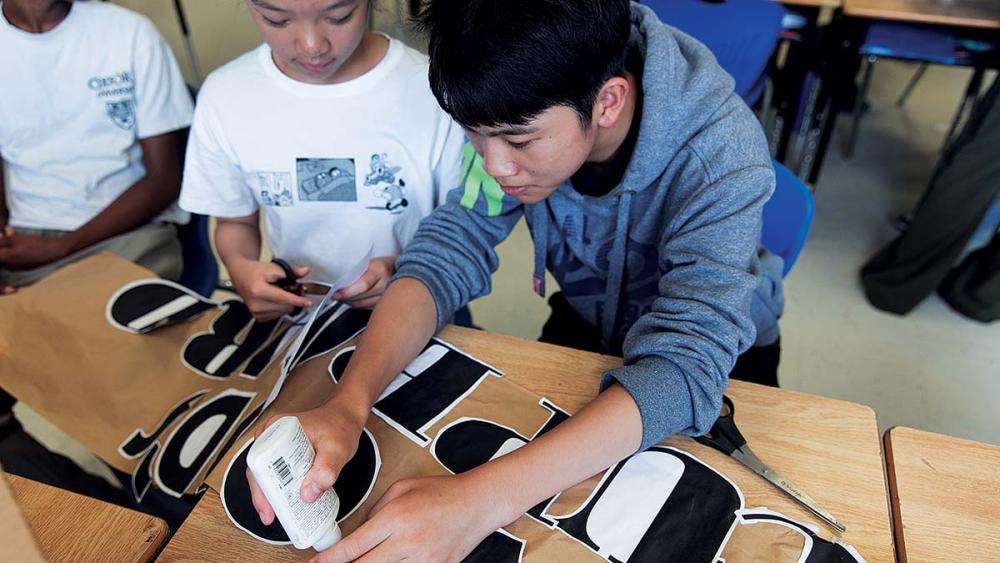
Their learning didn’t stay theoretical. They wrote persuasive letters advocating for universal school lunch programs. They created posters and infographics to raise awareness within the school. And they developed a real-life action plan to stock our Cedarwood Care Cupboard with items that met both nutritional and cultural needs.
Through this work, students saw that caring for others means more than offering charity; it means listening, learning and challenging systems that create inequality in the first place. Perhaps the most important lesson was this: when young people are trusted with real issues and given the space to act, they don’t shy away, they rise.
Financial Literacy Meets Community Needs
To make the learning experience more hands-on and meaningful, I integrated a unit on financial literacy as a math lesson and a real-world exploration of the economic challenges many families face when trying to meet their basic needs. The goal was to help students see the connections between income, budgeting and food insecurity.
We began by analyzing grocery store flyers, comparing prices and identifying which foods offered the most nutritional value for the lowest cost. Students learned to account for things like sales tax, price per unit and shelf life, important considerations when resources are limited.
From there, students worked in groups to create budget plans for hypothetical families, taking into account real-life variables such as minimum wage income, rent in the Greater Toronto Area, transportation, child care and grocery costs. We looked up the minimum wage in Ontario ($16.55 an hour at the time), calculated what that translated to in monthly income, and then compared that to the average rent for a two-bedroom apartment in Markham (often upwards of $2,000 a month).
When students tried to budget within these constraints, the math was eye-opening. They were shocked to discover how impossible it was to cover basic living expenses, let alone eat healthy, balanced meals, on a minimum wage. This led to rich discussions about the difference between a minimum wage and a living wage, and what it means when people work full-time and still can’t afford necessities.
Many students reflected on how much their perspectives had shifted. In journals, some wrote about how they had never thought about the true cost of groceries, or how hard their parents might be working to make ends meet. Others shared personal stories or observations about food choices at home, and how this project helped them appreciate the sacrifices their families make.
These reflections were powerful. They showed that students weren’t just learning numbers, they were developing empathy, economic awareness and a deeper understanding of systemic inequity. One student wrote, "I used to think people went to food banks just because they didn’t try hard enough. Now I know it’s way more complicated than that."
By engaging with real data, realistic scenarios and meaningful reflection, students began to see that food insecurity is not about personal failure, it’s about economic systems that are failing families.
Turning Learning Into Action
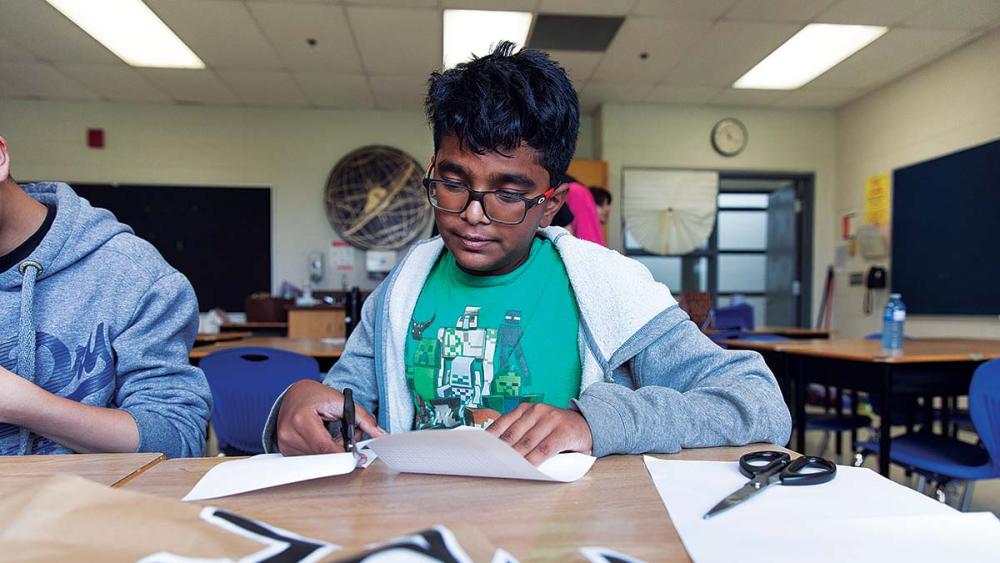
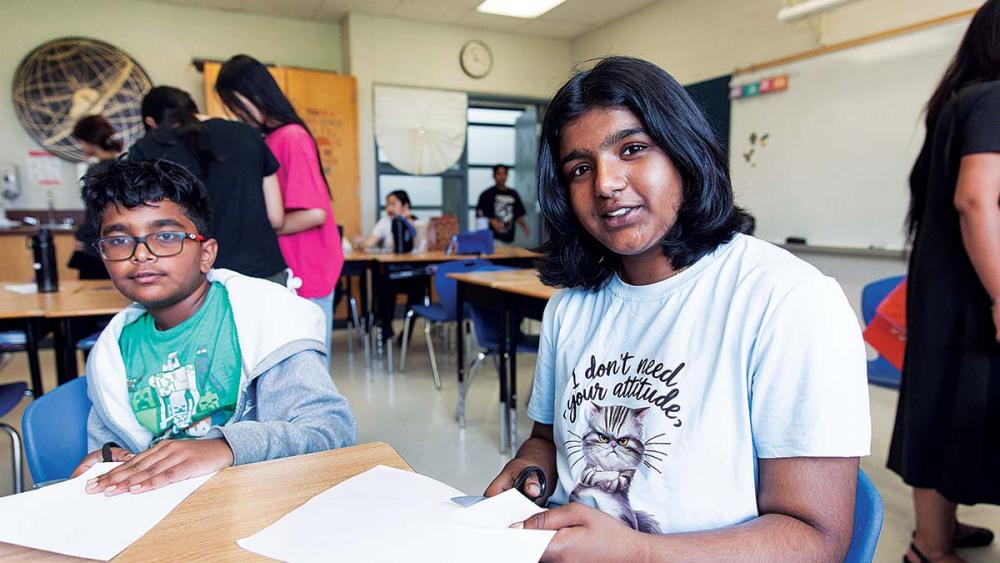
Our discussions naturally led to the question: What can we do to help? Inspired by the students’ enthusiasm, we decided to create the Cedarwood Care Cupboard, a space within our school that would house non-perishable food items, clothing, books and toys. The idea was simple: families in need could come and take what they needed, with no questions asked.
To stock our care cupboard, we needed supplies. I reached out to my family, friends and school colleagues, sharing our project and its goals. Their generosity was overwhelming: we raised $800 in monetary donations. The students and I then took on the exciting task of shopping for items.
With our budget and shopping lists meticulously prepared, we headed to the local grocery store. This field trip was not just about buying food, it was a real-world application of the financial literacy skills they had learned.
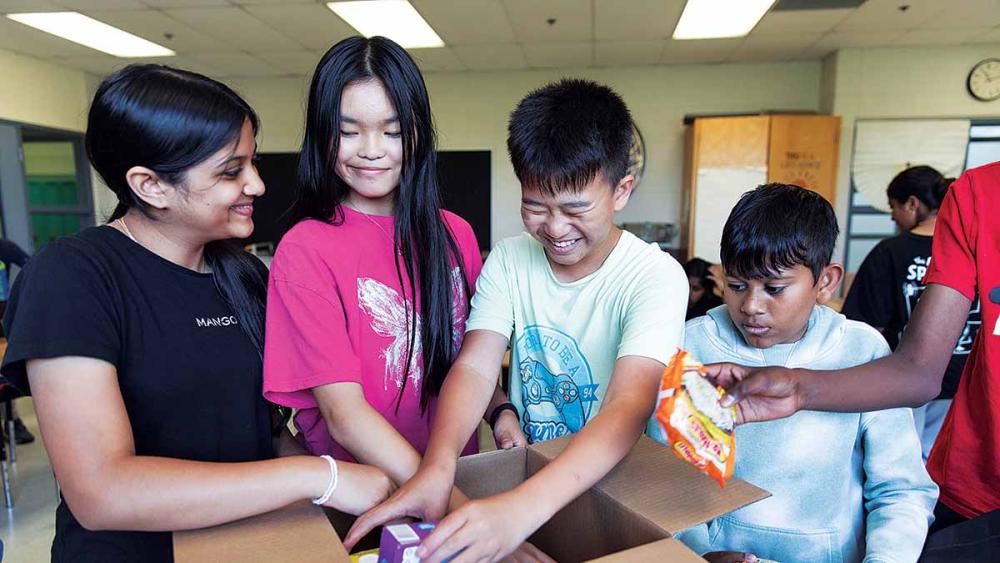
The students compared prices, looked for sales and made strategic decisions about which items to purchase. They considered cultural and religious dietary needs, purchasing items such as halal products, lentils, rice, noodles and beans. It was heartwarming to see their thoughtfulness and teamwork.
Back at school, we organized the items and officially launched the Cedarwood Care Cupboard. The students took pride in their work, knowing that they were making a tangible difference in the lives of others.
We also took time to reflect on the experience. The students wrote journal entries about what they had learned, academically and personally. Many expressed a newfound appreciation for the privileges they often take for granted. They also shared ideas for how we could sustain and expand the care cupboard in the future.
Understanding the Bigger Picture
To deepen their understanding beyond immediate needs, we looked closely at the broader systemic forces driving food insecurity, such as rising inflation, stagnant wages, unaffordable housing and limited access to social supports. Students analyzed data from credible sources like Food Banks Canada and Daily Bread Food Bank, and they created Google Slides presentations to explain how economic trends like inflation or cuts to social assistance programs directly impact a family’s ability to afford food. These were displayed in the front foyer of our school to educate others about food insecurity.
The students were particularly surprised to learn how many people in our own Markham community, many of whom work full-time, still need to rely on food banks. The data helped make abstract terms like “food insecurity” more concrete. They saw how demand for food banks has risen sharply, but funding and food supply haven’t kept pace. From there, our discussions turned to what it means to advocate for lasting change. We talked about how charity meets urgent needs, but justice addresses the root causes. This led to a powerful class conversation about what we can do, individually and collectively, to reduce or eliminate the need for food cupboards in the first place.
Students brainstormed and shared a range of ideas:
- Writing letters to local MPPs to advocate for universal school lunch programs and increased social assistance rates
- Partnering with local grocery stores for ongoing food donation programs
- Creating school-wide awareness campaigns about the hidden nature of food insecurity
- Holding monthly themed drives (e.g., “protein month,” “breakfast basics”) to stock the care cupboard more intentionally
- Advocating for living-wage policies and educating peers about the difference between minimum wage and a living wage
While the Cedarwood Care Cupboard served as our immediate action, something we could do now to help families, we made it clear that the long-term goal is to reduce the need for it altogether. Our class motto became: “We stock the cupboard today, so that one day, we won’t need one.” These conversations helped students realize that real change often requires pressure on decision-makers and shifts in policy, not just donations. They began to see themselves as change-makers, capable of using their voices to push for a more equitable society.
A Lasting Impact
The impact of this project was profound. The care cupboard became a symbol of hope and community within our school. Families expressed their gratitude, and the students felt empowered by their ability to make a difference.
As an educator, I couldn’t be prouder of my students. They demonstrated compassion, critical thinking and a commitment to social justice. They learned that advocacy isn’t just about grand gestures – it’s about taking meaningful action, no matter how small, to support those in need.
The success of this project has inspired us to think about how we can continue to support our community. We are exploring partnerships with local organizations and planning future projects that address other areas of need.
Through this experience, my students have learned that they have the power to create change. They have seen first-hand the importance of empathy, advocacy and community care. These are lessons that will stay with them long after they leave my classroom.
Teaching is more than delivering curriculum content; it’s about preparing students to be thoughtful, compassionate and engaged citizens. The journey we took this year at Cedarwood Public School was a testament to the power of education to inspire change.
As we continue to navigate the challenges of our world, I am confident that these young advocates will carry the lessons they’ve learned into their future endeavours. They are the change-makers of tomorrow, and it has been an honour to be part of their journey.
Neema Patel is a member of the York Region Teacher Local.