Building Confidence, Community and Futures
In today’s classrooms, educators are constantly searching for meaningful ways to engage students, build essential skills and prepare them for an increasingly complex technological world. Nowhere is this need more urgent than in the Junior and middle-school years, a pivotal time when students begin to shape their identities, interests and beliefs about themselves and what they are capable of achieving. For many girls, this is also the time when interest in science, technology, engineering and mathematics (STEM) begins to decline. As educators, we are called not only to notice this decline but to actively disrupt it.
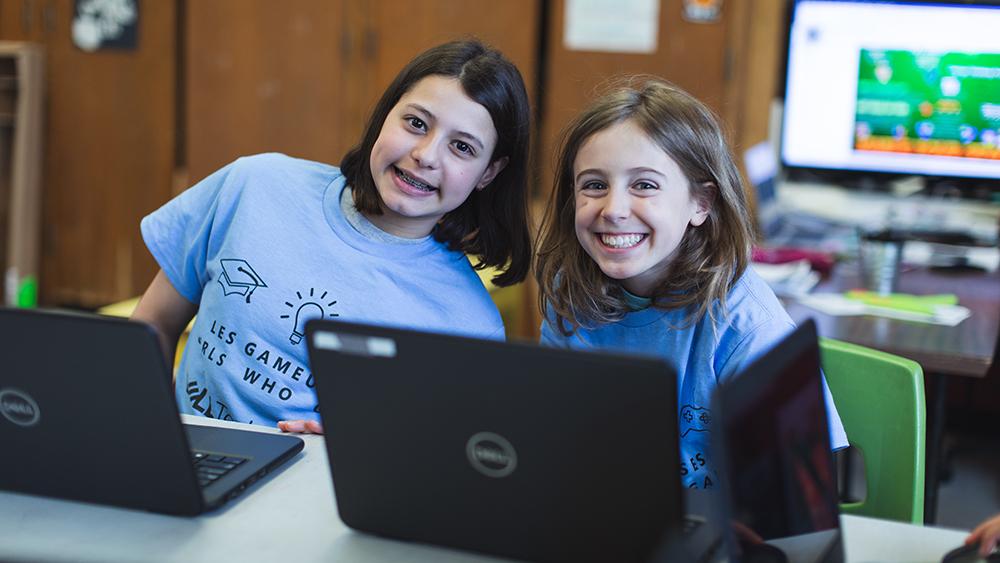
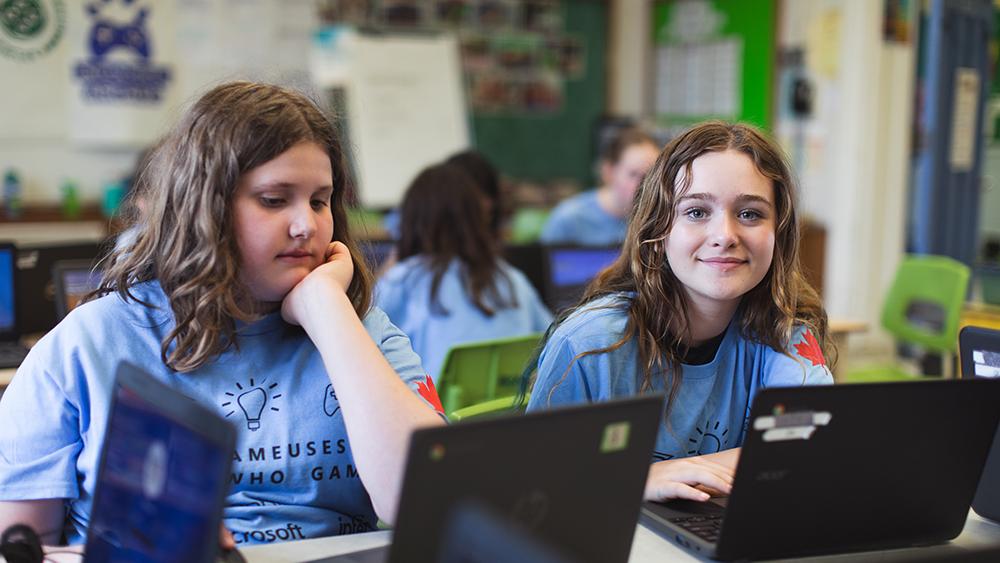
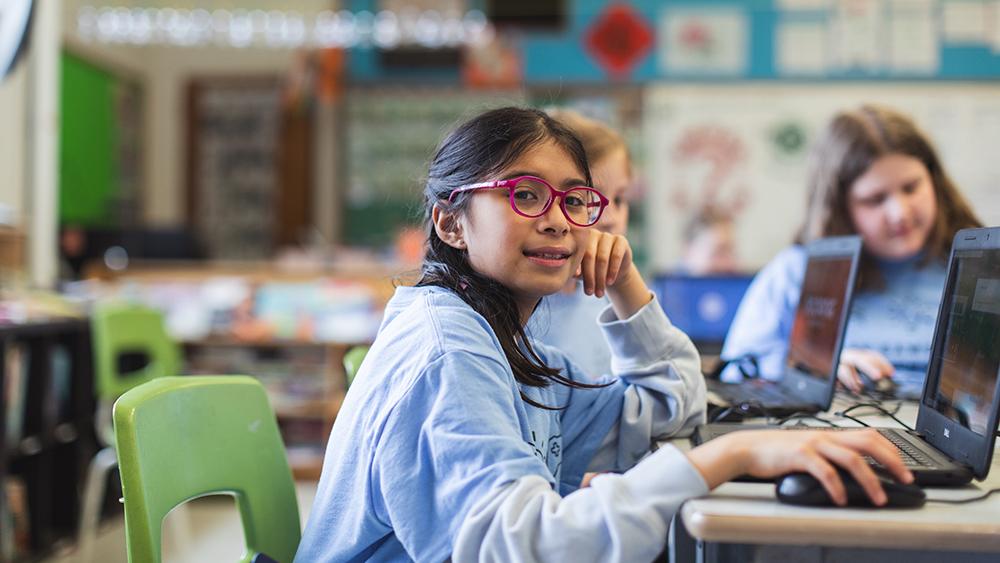
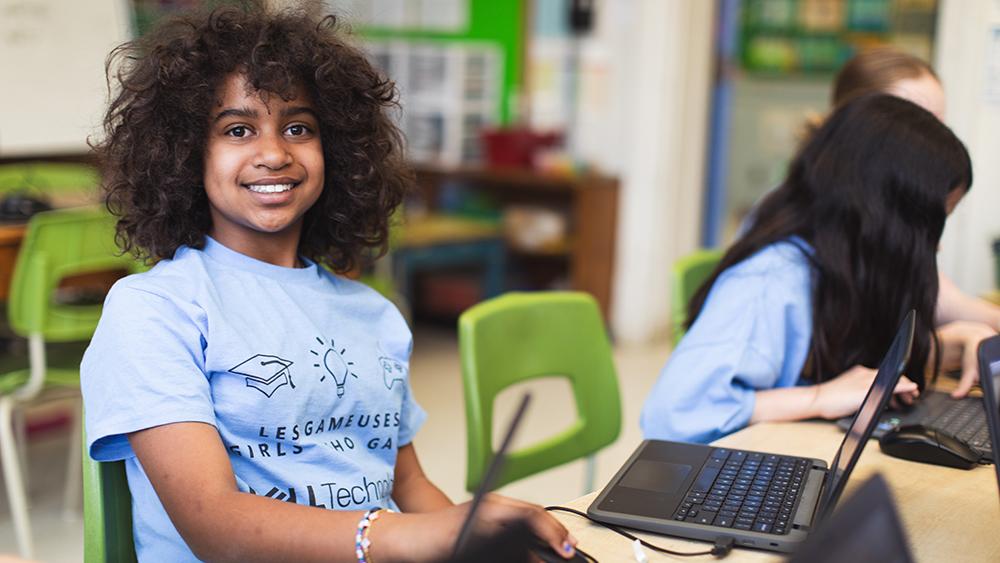
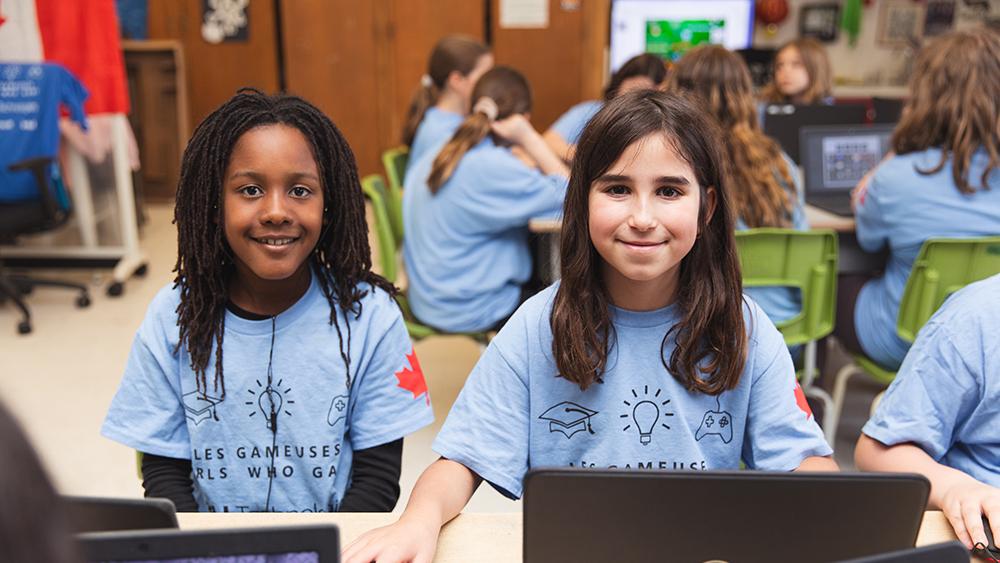
One program that has proven to be both effective and transformative is Girls Who Game (GWG). Over the last five years, we have gone on a journey with GWG to rethink our classroom and learning spaces to support girls and allies. Girls Who Game is a free extracurricular program created by Dell Technologies with partners Microsoft and Intel Open to All, the program provides an opportunity for students across the world to learn about STEM through game-based learning. Players learn skills such as computational and critical thinking, communication, collaboration, creativity, problem-solving and innovation. GWG is a dynamic, learner-driven program that develops STEM competencies, leadership skills and confidence through collaborative problem-solving in both in-person and virtual environments. Through our experience implementing GWG, we have witnessed first-hand how it can reshape how girls see STEM and, more importantly, how they see themselves.
Interpreting the "STEM Cliff"
Research consistently highlights middle school as a critical period for STEM identity formation. While many students, particularly girls, perform well academically in science and math, their interest and confidence in these subjects often decline during these years, resulting in a clear drop-off in girls pursuing STEM academically and professionally (a.k.a. the “STEM Cliff”).
The most powerful predictor of whether a middle-school-aged girl will pursue STEM is not her grades but her belief in her own capability. This is where programs like GWG become essential. By creating environments where girls can explore STEM in collaborative and engaging ways, we can positively influence their self-perception. We have observed when our students are given the opportunities to succeed, to lead and to see themselves reflected in STEM spaces, they begin to reimagine what is possible.
Learning with Purpose
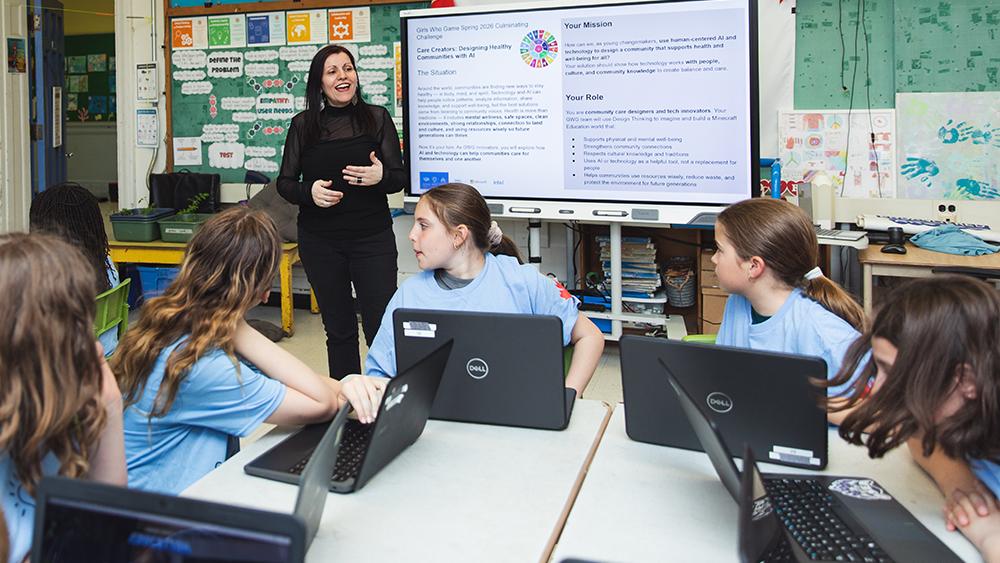
Girls Who Game is an international program that brings students together to collaborate in teams and design solutions to real-world challenges using Minecraft Education. Within the GWG program, there are three levels that students move through: Level 1 is design challenges, Level 2 is leadership and Level 3 is e-sports tournaments. Each year, Level 1 students are presented with a global design challenge aligned with United Nations Sustainable Development Goals (UN SDGs). These challenges invite students to think critically about sustainability as they consider solutions to issues such as clean energy, food security, gender equality and sustainable communities. They then research, plan and build solutions in Minecraft Education. These are then curated into short video pitches that adjudicators from Dell provide feedback on using the design thinking and global competencies framework.
Level 1 GWG students might be tasked with providing potential solutions to design challenges such as:
- Design a community of the future that prioritizes affordable and clean energy and gender equality (includes accessibility for all, implements equality and includes Indigenous knowledge and perspectives).
- Create an eatery of the future that addresses zero hunger and clean water access.
- One of our newest design challenges includes innovative ways to implement AI. This approach helps increase awareness of AI without explicit teaching of tools but showing what we need to consider (ethics, bias, opportunities etc.) in a safe and responsible way.
At first glance, it may look like “just gaming,” but beneath the surface, students are engaging in complex, interdisciplinary learning. They are researching, considering cultural perspectives, applying the design thinking process and collaborating to build innovative solutions.
As one Grade 5 student reflected: “The club wasn’t just smooth and just like playing around with Minecraft – it was more hard-working.”
This blend of engagement and rigour is what makes GWG so powerful.
Skill Development That Goes Beyond the Screen
Through GWG, students develop a wide range of competencies that extend far beyond their traditional academic outcomes. These include transferable skills such as:
- Critical thinking: Evaluating ideas, making decisions and redefining designs
- Communication and collaboration: Working effectively in teams and presenting ideas
- Creativity and innovation: Designing unique, meaningful solutions connected to real-life problems
- Leadership: Guiding peers, mentoring others and taking initiative
- Computational thinking: Breaking down complex problems and designing solutions
These are not just “nice to have” skills, they are essential for long-term academic success. More importantly, they are skills that students begin to internalize as part of their identity.
Building an Ecosystem of Leadership and Mentorship
What has made our implementation of GWG particularly impactful is the intentional creation of a sustainable, student-driven ecosystem. Rather than existing as a one-time club or isolated experience, GWG has become a living, evolving community within our classroom spaces. At the heart of this ecosystem is a powerful cycle of mentorship.
Girls who begin at Level 1 eventually grow or move into Level 2 leaders. These experienced students return to participate and to mentor, guide and inspire the next cohort. They support new learners, model collaboration and take on leadership roles in both structured and informal settings. This continuity transforms the program from an activity into a community.
It is not uncommon to see former GWG members stepping confidently into leadership roles, running sessions in class, supporting e-sports tournaments or helping peers navigate design challenges. These moments are powerful for the younger students and for the mentors, who begin to see themselves as capable leaders in STEM spaces.
This peer-to-peer model aligns with research on female persistence in STEM, which highlights the importance of collaboration, access to relatable role models and opportunities for early success. Studies show that exposure to female role models can increase girls’ self-efficacy, sense of belonging and interest in pursuing STEM pathways, while collaborative hands-on environments such as game design and team-based problem-solving further strengthen engagement and positive perceptions of STEM careers.
Learning Through Real World Connections
Another strength of GWG is its ability to connect students with authentic audiences and real-world experiences. Through partnership and events, including e-sports tournaments and collaborations, students are given opportunities to showcase their work beyond the classroom.
These experiences matter. They signal to our students that their ideas have value, their voices deserve to be heard and that they are part of a global community of learners and innovators. Students are not simply completing assignments; they are contributing to conversations about the future.
Student opportunities to share their voices and perspectives include presenting at the Toronto District School Board’s Unleashing Learning Conference, where students discuss their experiences with all three levels of GWG and the influence the program had on their learning, and pitched more schools to explore these learning experiences. Students were invited to the DELL Technology Conference at the Metro Toronto Convention Centre to take part in a panel discussion with STEM leaders to share their perspectives and participation in GWG. At the Serious Play Conference, students from McMurrich and Woburn junior public schools showcased their team-building skills and took part in a Q&A session with educators and business partners. At the France x Canada: The Olympic Sports Movement event at Humber Polytechnic last June, McMurrich students from GWG showcased their incredible digital literacy skills in a special build challenge and live “game off” in Minecraft Education during Toronto Games Week. GWG participants also had the opportunity to listen to leaders from the French Embassy in Canada who talked about women in e-sports spaces. Girls also participated in the Ontario School E-sports Association (OSEA) provincial esports tournament at Humber College.
Integrating STEM, Global Competencies and Curriculum
Girls Who Game aligns seamlessly with key educational frameworks including the ISTE Standards for Students, TDSB global competencies/ transferable skills and the United Nations Sustainable Development Goals.
Through the program, students engage in:
- Global citizenship: Exploring issues such as, sustainability and equity
- Digital literacy: Using technology responsibly and creatively
- Design thinking: Empathizing, defining, ideating, prototyping and testing
Grade 6 students’ reflections highlight the depth of this learning:
“I was researching my communities and what we had to do to provide for their needs.”
“I learned to address the needs of the community through our eatery of the future.”
“I got to learn about lots of new people … and about the Indigenous community and their culture.”
These reflections demonstrate that as the students are building technical skills, they are also developing empathy, cultural awareness and a deeper understanding of the world around them.
Confidence as a Catalyst
Perhaps the most significant impact of GWG is its effect on the confidence of the girls in the program. Time and again, students describe how the program has changed how they see themselves. As girls in the program reflected:
“GWG showed me that all people can be in STEM.”
“I collaborated with my team.… It was very fun and a good educational skill that I learned.”
“I have always been interested in STEM but Girls Who Game gave me the opportunity to do things in STEM that I would not have otherwise while also teaching me lots about STEM, coding and teamwork.”
“GWG was such a great experience. It encouraged me to open up to more people and taught me how to improve my collaboration skills. I learned so much about STEM in our world and using innovative technology to create more sustainable/accessible improvements to our community while building new friendships with my peers. It was incredibly fun, and I will always remember GWG.”
Confidence is not built through lessons or worksheets, it is built through experience as students are trying, failing, succeeding and being supported along the way. GWG provides a safe space for this growth. We encourage our students to take risks, share ideas and learn from one another. They are not judged solely on outcomes, but on their process, effort and, most importantly, collaboration.
Why Game-Based Learning Works
At first, as educators we were unsure if game-based learning in the classroom would be effective. However, we discovered that when used intentionally, it can be one of the most powerful tools for learning.
Game-based learning environments like Minecraft Education offer:
- Immediate engagement: Students are motivated and invested
- Creative freedom: There is no single “right answer”
- Collaborative spaces: Students work together in real time
- Authentic problem-solving: Challenges mirror real-world issues
In GWG, gameplay is not the goal – it is the vehicle. It allows our students to take on complex concepts in a way that is accessible, meaningful and enjoyable. It bridges the gap between play and learning, showing our students that the two are not mutually exclusive.
The Role of the Teacher: Facilitator, Mentor, Learning
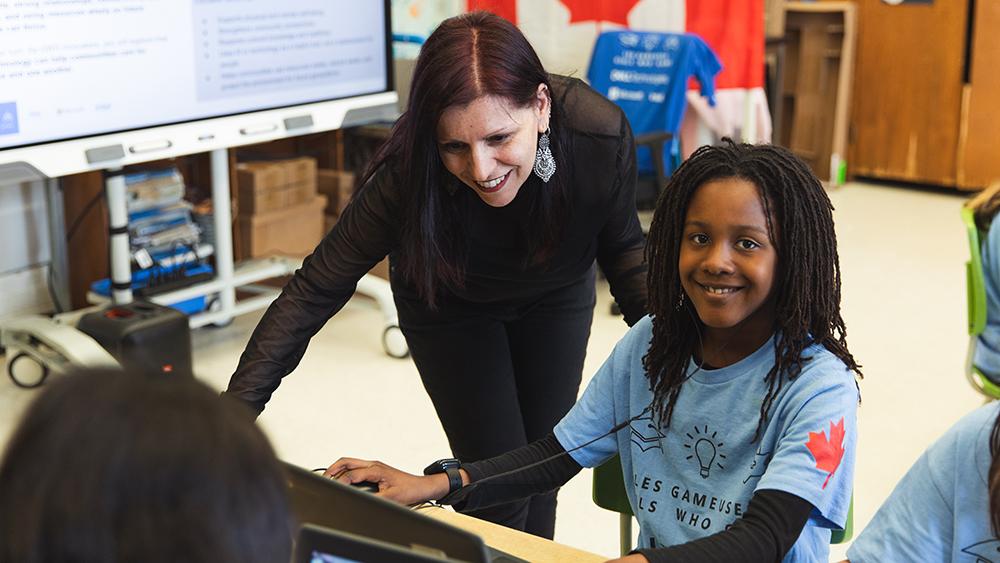
Implementing GWG also shifts the role of the teacher. Rather than being the sole source of knowledge, teachers become facilitators of learning – guiding, supporting and learning alongside students. This requires a willingness to embrace uncertainty, to allow students to take the lead, and to trust the process.
It also requires intentional planning, creating inclusive and supportive environments, encouraging student voice and choice, providing opportunities for leadership and connecting learning to real-world contexts. When done effectively, the result is a classroom culture where students feel empowered, valued and capable.
A Story of Growth and Possibility
Perhaps the most compelling reason to implement GWG is the story it tells.
It is the story of students who return year after year, not because they have to, but because they want to. It is the story of girls who once hesitated to speak who are now leading teams and mentoring others. It is the story of a community that continues to grow, evolve and support one another. It is, ultimately, a story of possibility.
Why Girls Who Game Matters
In a time when educators are tasked with preparing students for an uncertain future, programs like Girls Who Game offer a powerful model for what education can be. It shows us that learning can be engaging, meaningful and joyful. It reminds us that students are capable of more than we sometimes imagine. It challenges us to rethink what it means to teach STEM.
By integrating GWG into our classrooms and schools, we are not just teaching coding or design, we are shaping identities, building confidence and opening doors. We are ensuring that girls see themselves as more than participants in STEM; they are seeing themselves as leaders. We believe that is a future worth building.
Kamla Rambaran and Zélia Capitão-Tavares are members of the Elementary Teachers of Toronto.