Culture, Connections and Curriculum
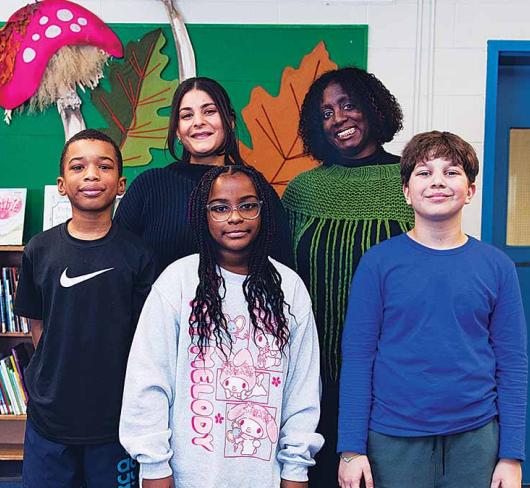
It is a cold November morning, and our Grade 2/3 French Immersion class is buzzing with excitement. I can hear English, French, Punjabi, Urdu, patois and other languages being spoken. In their hands, students are proudly holding their water and plant interviews. Each student asked their families how they use water and plants in their lives. Some students FaceTimed their grandparents living outside of Canada. Others interviewed their siblings and cousins and some students asked their parents.
As we sat in a circle, students shared how they used these living things at home, weaving between English, French and their home languages.
“À la maison, j’utilise paani for doing my prayers.”
“Je mange les plantes comme le callalloo, c’est dans le jardin de ma grand-maman in Jamaica.”
“Quand je parle à grand-maman, elle dit ‘wa’er’ instead of ‘water.’ That’s how you say water in patois.”
After sharing our answers from our interviews, we bundled up and took a short walk to our school garden. As we touched, smelled and looked at the plants, students made connections to their interviews and the Science curriculum. They also drew upon the stories we had read in class, including In the Garden with Dr. Carver by Susan Grigsby and Nibi a soif, très soif by Sunshine Tenasco, and their own lived experiences to make connections
“I see there used to be squash there. That is from le jardin des trois soeurs.”
“Je mange des tomates dans mon dîner. En été, je plante des tomates avec Dadima.”
“I see bhindi. That was my supper last night! Comment dit-on bhindi en anglais … et en français?”
I work in a very rich multilingual school community. For many of my students, French is the third or fourth language they are learning. Working with our FSL resource teacher Laura Smiley-Hacia, I understood the importance of student language identities being honoured, celebrated and affirmed in the French classroom.
Growing up as a student in the French Immersion program, I often heard “En français, s’il te plait!” Although I understand wanting students to only be immersed in French during French instruction, I challenge that notion. What if instead of only speaking French, students are invited to share the languages they speak at home? What if this opens the door for students to make linguistic connections and plurilingual transfers, all while sharing cultural knowledge and traditions? With this approach, students’ home languages are honoured and celebrated in learning spaces, creating inclusive learning environments where they feel affirmed and proud of their intersectional identities.
Encouraging students to explore both their home language(s) and French in their learning environments not only supports their French learning, it provides scaffolded learning opportunities, develops their intercultural awareness, and offers concrete opportunities to develop social skills and co-construct a classroom that welcomes all students’ identities and lived experiences. As educators, when we shift our mindset and view multiple languages as an asset rather than a deficit, students become active leaders in their learning.
Throughout the year, Laura visited my class with the goal of co-teaching French literacy skills and strategies and engaging students in outdoor education to build their identities as language learners. As we co-planned together, I was reminded of the value and importance of being intentional about visuals, especially when introducing students to new concepts.
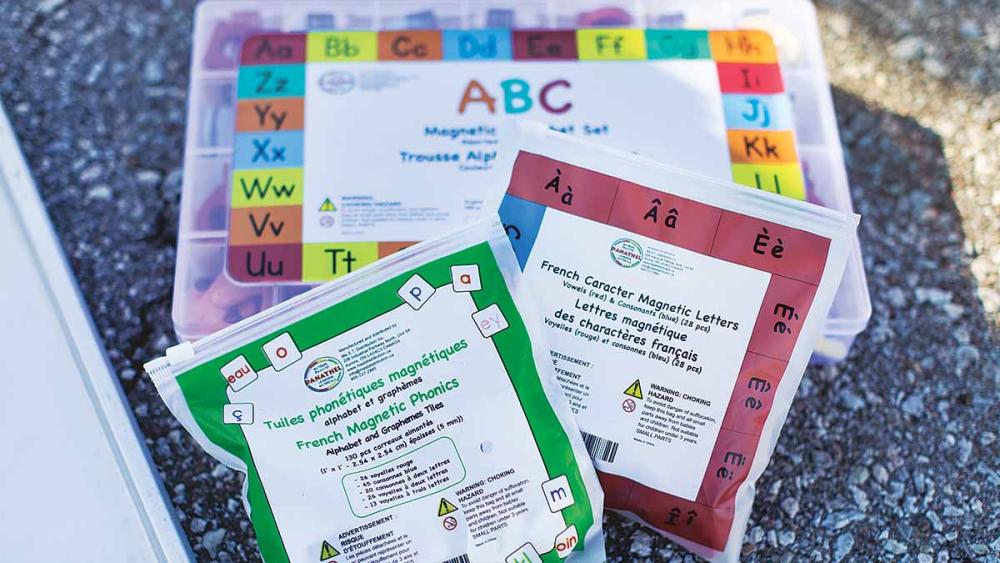
When students see themselves in their learning, they can make cross-linguistic transfers and feel seen and heard in their learning environments. For our literacy lessons, Laura and I worked to ensure the visuals represented students’ cultural backgrounds and their home languages. For example, when learning the U sound, I introduced the word légume and included pictures of vegetables that students ate, such as okra, callaloo and tomatoes. By including pictures of the foods students are familiar with, I opened up conversations that flowed between French and their home languages. This led to sharing stories of recipes, cooking and how and when their families enjoy eating these vegetables.
When learning about the “I” sound, we explored the word “riz” and made a list of different ways students make rice at home, using their home languages. Students shared how they use rice for pongal, rakhi, weddings, biriyani, sushi, rice and peas, and more. Including pictures of these with the words in students’ home languages affirmed their lived experiences in the French classroom and invited them to make personal connections while learning new French vocabulary and practising their literacy skills and strategies.
Through these lessons, not only did students learn about their classmates, but I also had the opportunity to learn more about their cultures and lived experiences. And students learned that languages should not be hierarchical; there is always space to welcome, to practise and to incorporate their home languages in their classrooms to support their French learning.
Laura and I intentionally co-planned lessons that touched upon metacognitive strategies to support learning in French. Through modelling and explicit instruction, students engaged in reflection on their French language learning, drew on their linguistic repertoires, and reflected on their identities as language learners. This served as a catalyst to develop their autonomy and confidence as French language learners, both inside and outside the classroom.
The students engaged in deep reflection, and they also had fun exploring French in their community. As a class, we sang, danced, read stories and went on nature walks in our school neighbourhood. We invited students to share their cultural knowledge and traditions along with the languages they speak at home. When walking on a snowy winter day, students saw lights along rooftops and made connections to celebrations with lights, such as the New Year, Diwali and Christmas.
Laura and I noticed the many positive benefits of outdoor education and realized the importance of incorporating this into our planning. Students are calmer and more engaged outdoors. They are able to ground themselves in nature and authentically practice self-regulation and socio-emotional skills and strategies
We also wanted to intentionally and explicitly model for students how French is all around us. During one of our nature walks, we passed a fire hydrant. Laura stopped the class and said, “What letter does this look like?” One student responded that the fire hydrant looks like the letter T. Together as a class, we listed French words that had the T sound at the beginning, middle and end of the word. By inviting them to speak French outside the classroom, students are able to construct and imagine a plurilingual world, where French can belong outside of the classroom and their home language can belong in their learning environments.
In the classroom, we found ways to use the nature around us as learning tools that support literacy instruction. One fall day, Laura visited my class with a leaf in her hand that she found in the schoolyard. We turned the leaf upside down and saw that it made the letter V. Together as a class, we thought of words that had the V sound. We then looked at the leaf again, exploring whether we could “see” any other letters. As we passed the leaf around in a circle, students were able to trace the letter V and make a tactile connection to the sounds and letters
Students were invited to share connections with nature and literacy to their lives. During Laura’s winter visit, she brought a flower to our class, and we sounded out the word fleur by stretching out sounds (“fffllleeuuurrr”), applying a literacy strategy that we use in class. We named the parts of a flower and thought of other words with the F sound. Laura then explained that she had used this type of flower for her wedding and all of a sudden there was a buzz in the classroom! Students were eager to share how they use flowers for religious ceremonies, weddings and celebrations. Some students shared how when they visit their families in Jamaica, they see different flowers than the flowers they see in Canada. Other students shared how they see lots of red flowers during Valentine’s Day. Many students had just celebrated Thai Pongal and were eager to share how flowers were used to decorate their homes. They explained the names of the flowers in Tamil, as well as the traditional dishes they eat during this celebration.
As we learned how plants were used by students and families in our class, we also visited our school garden in every season to learn how plants grow and change. Students were familiar with the plants and were able to make connections between their traditional dishes and the herbs and vegetables in the garden. Many students in our community live in intergenerational homes and enjoy gardening with their grandparents, aunties and uncles. Students described how they garden at home with their families while speaking in French, English and their home languages.
We also wanted to connect our outdoor education program to Indigenous teachings about the land. Working with our board equity department, Laura met the Indigenous resource teacher and was able to meet with Indigenous Elders in our community. Laura shared our learning goals and our experiences integrating outdoor education and plurilingualism with students. From the Elders, Laura received permission to share some Traditional Knowledge about plants with me and my students.
In French, weeds are called les mauvaises herbes, which literally translates to bad grass. We are taught that weeds are bad and that they need to be removed. Through learning with Elders, Laura shared how every plant, every living thing, has a purpose and meaning. Even plants that we may think need to be weeded out can be used for food or other purposes in our environments to support other living things.
Laura and I spoke about finding intentional ways to make cross-curricular connections through outdoor education and literacy instruction while learning about truth and reconciliation. I borrowed a Treaty Kit from my board and students learned about the significance of the Wampum belt, while building one with Lego. As a class, we read Alex partage sa ceinture Wampum and Dakota parle des traités, both by Kelly Crawford. We found many opportunities to make connections by discussing how we can honour treaties, why they are important, and our responsibilities as settlers to listen and to learn from Indigenous people through relationships and reciprocity.
My class also read books from the À la une – Enquête book series, which is designed to engage students in inquiry-based learning. We read French story books and French nonfiction texts written and edited by First Nations, Inuit and Métis peoples from all over Turtle Island.
Students were able to make connections to their cultures and lived experiences while learning more about Indigenous cultures and traditions. For instance, when learning about the importance of drums in First Nations ceremonies, students made connections to different types of drums used in their cultural ceremonies and shared the names of these instruments in their home languages, such as dhols for weddings and drums played during the lion dance during Lunar New Year.
By intentionally creating opportunities for students to explore their home languages in the classroom and outdoors, our grade 2 and 3 students were able to authentically engage in culturally responsive and relevant pedagogies to affirm their identities and continue to develop their French literacy strategies and skills. When students are able to engage in plurilingual approaches through literacy instruction, they are able to make meaningful linguistic connections to strengthen their knowledge and application of literacy strategies and skills.
This project was deeply meaningful for me as an educator, as I was able to learn more about my students’ lived experiences and – just like my students – I became a language learner with them! I am inspired to continue to find ways to engage in outdoor education, make intentional connections to truth and reconciliation and to invite students to engage in culturally responsive and reflective pedagogy to support their French language and literacy skills.
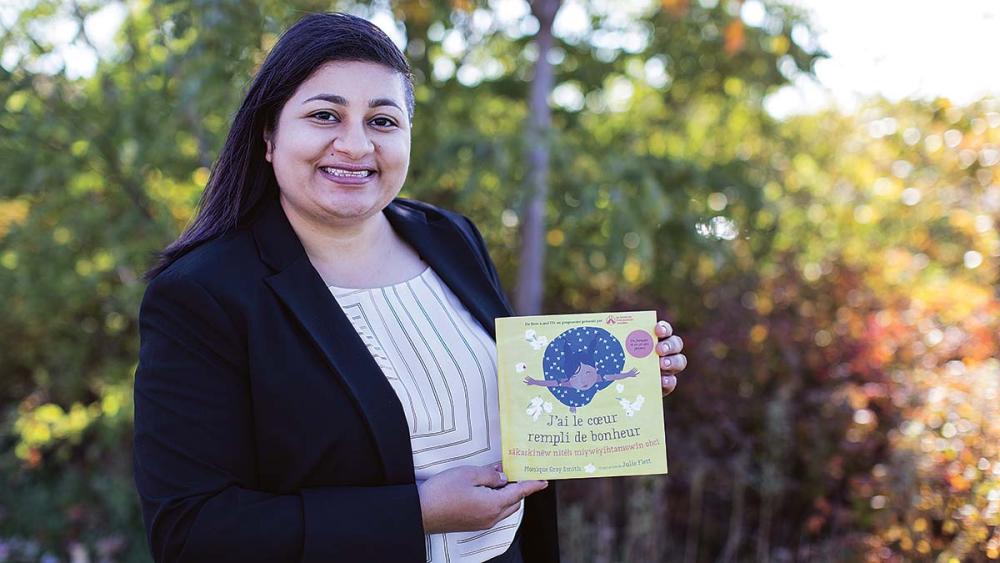
Asha Nagpal is a member of the Peel Teacher Local.