Your Voice is Power
In classrooms across Ontario, educators are increasingly being called upon to do more than deliver curriculum. We are asked to create learning environments that are responsive, inclusive and reflective of the diverse identities, histories and futures of our students. At the same time, we are preparing learners for a rapidly evolving world shaped by technology, digital communication and global interconnectedness. The question for many of us is not simply what we teach, but how we teach and whose voices, stories and ways of knowing are centred in that learning.
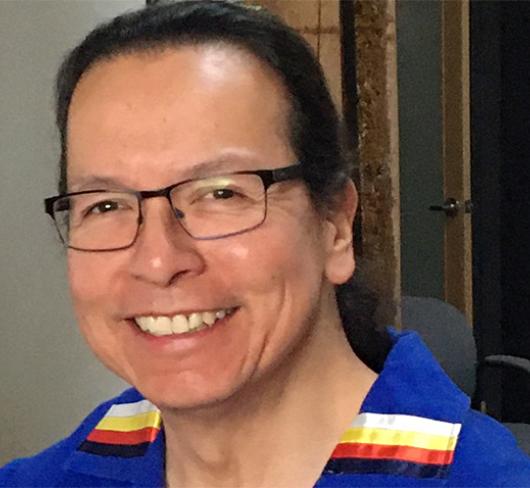
As an Indigenous education instructional coach in Renfrew County working with students from Kindergarten to Grade 12 across 28 schools, I was thrilled when I was provided the opportunity to engage in a program that aligned with my goals, was fun and allowed my students to reflect on the land they are situated on.
Your Voice is Power
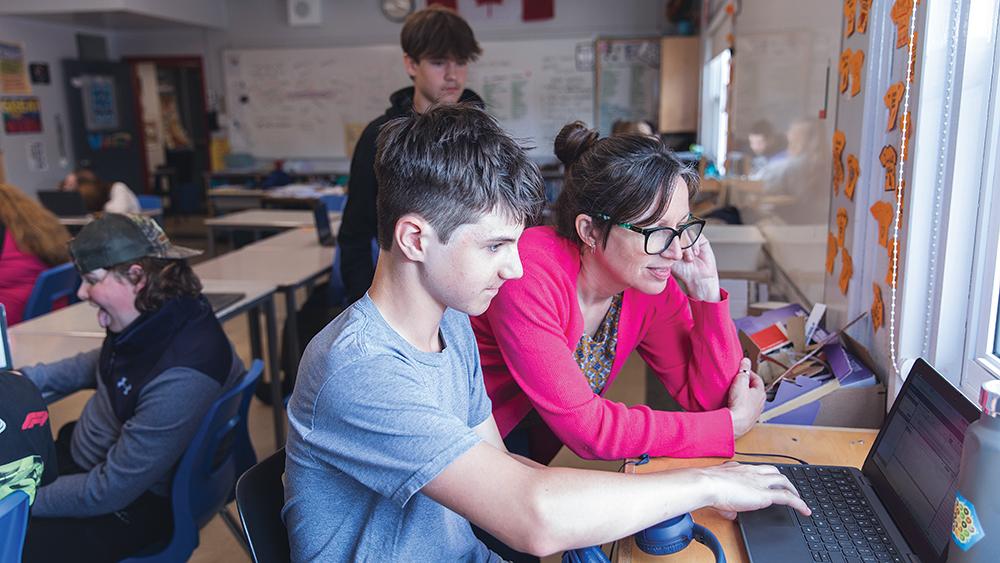
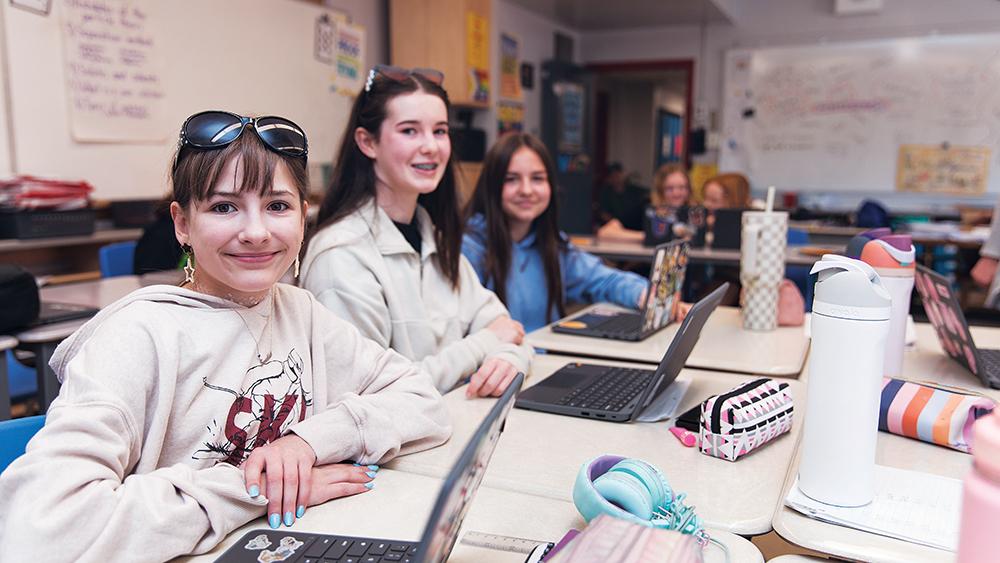
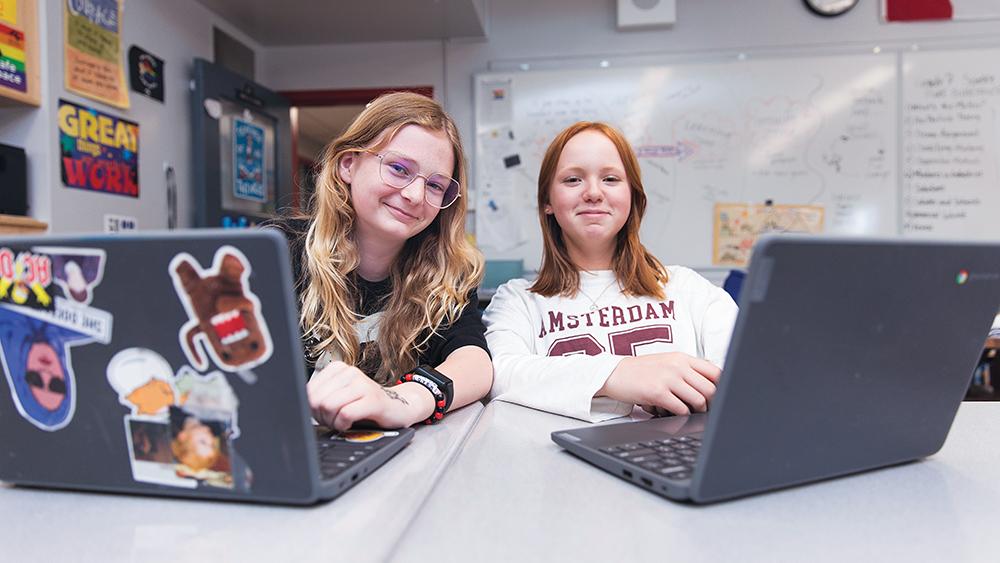
In 2025, a number of students in grades 5 to 8 in Renfrew County participated in Your Voice is Power, a free, national program for Canadian students that introduces them to coding through music remixing. The program teaches students to create and organize digital music with code; musical elements like rhythm, tempo, song structure and layering sounds; about social justice and Indigenous perspectives; how to solve problems creatively; and to think about how technology and art can create social impact.
At the heart of Your Voice is Power is a commitment to centring Indigenous knowledge, experiences and voices. Students engage with music created by Indigenous artists, using their works as both inspiration and entry points for deeper learning. The program was developed in collaboration with Indigenous educators and communities, helping ensure the content is authentic, respectful and grounded in lived experience. For educators, this provides an important layer of support and confidence, particularly when engaging with topics that require care, sensitivity and ongoing learning.
Through carefully designed modules, learners explore themes such as identity, resilience, community and resistance. They also engage with more complex and often challenging topics, such as colonization, racism, allyship and the ongoing impacts of the Truth and Reconciliation Commission of Canada’s calls to action.
Importantly, this learning is not positioned as an “add-on” or a single lesson within a broader unit. Instead, Indigenous perspectives are embedded throughout the program, shaping both content and approach.
Students are invited to consider questions such as:
- How can technology amplify marginalized voices?
- What role can digital tools play in preserving Indigenous languages and cultures?
- How can we use our learning to contribute to positive change in our communities?
These questions encourage critical thinking and reflection, and support the development of empathy and social awareness. Students are positioned as active participants in reconciliation, rather than passive recipients of information.
Beyond Computer Science
While the program is, at its core an introduction to coding, its reach extends far beyond computer science. The lessons align with multiple areas of the Ontario curriculum, offering rich opportunities for integration:
Mathematics: Students read, modify and create code, working with sequencing, variables, loops and functions. They explore how changes to code impact both efficiency and outcomes.
Science and Technology: Learners investigate how digital tools can be used alongside other disciplines to address real-world problems.
The Arts: Through music remixing, students analyze how media and sound contribute to personal and cultural identity, while also creating original compositions.
Social Studies: Students develop inquiry questions and examine diverse perspectives, including those of First Nations, Métis and Inuit communities.
Language: Learners engage critically with themes related to Indigenous identities, histories and ways of knowing, deepening both comprehension and communication skills.
This level of integration reflects a shift away from siloed subject areas toward a more connected and responsive model of teaching and learning. It also aligns with growing recognition that complex, real-world issues cannot be understood – or addressed – through a single disciplinary lens.
Coding as a Tool for Expression and Advocacy
For many students, Your Voice is Power is their first experience with coding. Traditional entry points into computer science can feel abstract or intimidating, particularly for learners who may not yet see themselves reflected in STEM fields. By contrast, Your Voice is Power begins with something immediate and accessible: sound.
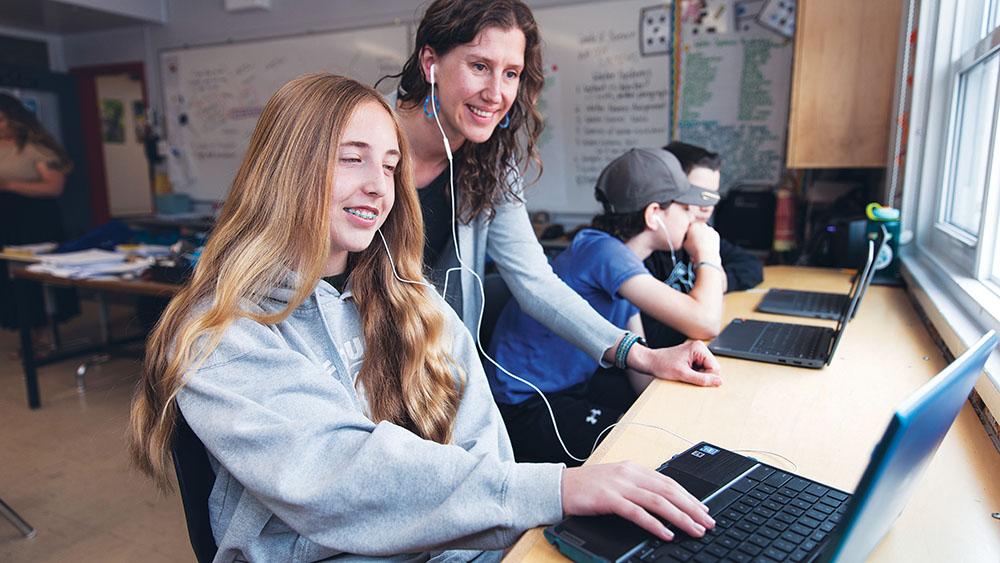
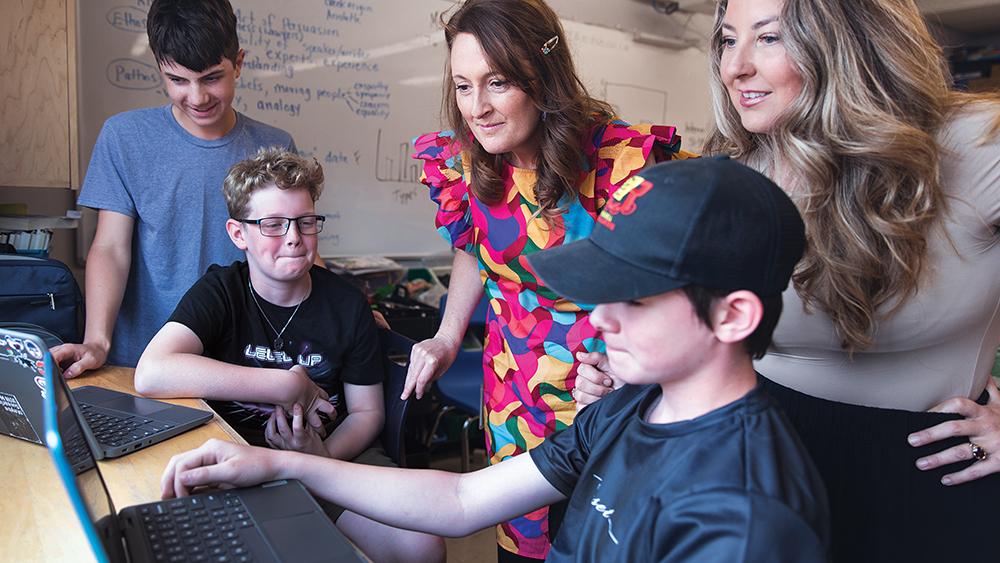
Using an online platform called Ear-Sketch, students experiment with loops by repeating drum patterns, explore variables by adjusting tempo or pitch, and use functions to structure songs into verses and choruses. As they code, they hear the results of their work in real time. This immediate feedback supports engagement and understanding, making complex concepts more tangible.
A unique and motivating feature of the program is its national competition component. Students have the opportunity to submit their remixed tracks for recognition and prizes, adding an authentic audience and sense of purpose to their work. The competition centres on remixing songs by Indigenous artists such as Jayli Wolf, Dakota Bear, Samian, Twin Flames and Aysanabee. These artists bring a diversity of styles, languages and lived experiences into the classroom, with many tracks featuring multiple Indigenous languages along with English or French.
The competition elevates student engagement by positioning their work within a broader national context. Students are not simply completing an assignment, they are contributing to a larger creative and cultural conversation. The opportunity to remix music rooted in Indigenous identity and storytelling also deepens students’ appreciation for the richness and diversity of Indigenous artistic expression.
More importantly, coding is positioned as a form of expression rather than simply as a technical skill. Students are not just completing tasks, they are creating, composing and learning how to communicate using digital tools to tell stories, share perspectives and respond to the world around them.
This shift in framing is significant. When students see coding as creative and meaningful, rather than procedural, it opens the door for broader participation. It challenges longstanding stereotypes about who belongs in technology spaces and invites a wider range of learners to engage with confidence.
Accessibility, Inclusion and Engagement
One of the strengths of Your Voice is Power is its accessibility. The program is offered free of charge and is available in multiple languages, including French, Ojibwe and Inuktitut. It also requires minimal equipment – just a device, headphones and internet access – making it feasible for a wide range of classroom contexts.
This accessibility extends beyond logistics to include pedagogy. By using music, the program engages students who might not typically gravitate toward coding or technology. It creates multiple entry points for learning, allowing students to draw on their interests, strengths and prior knowledge.
For some learners, the appeal lies in the technical aspects of coding. For others, it is the creative process of building a song. Still others are drawn to the social and cultural themes embedded in the program. This flexibility allows educators to meet students where they are, while also gently extending their learning.
The result is a classroom environment where a wider range of students feel seen, valued and capable.
Supporting Truth and Reconciliation in Practice
Across Ontario, educators are working to respond meaningfully to the Truth and Reconciliation Commission’s calls to action. This work requires more than intention; it requires concrete, sustained efforts to integrate Indigenous perspectives into everyday teaching and learning.
Programs like Your Voice is Power offer one pathway forward. By embedding Indigenous voices into both content and pedagogy, the program supports educators in moving beyond surface-level inclusion toward deeper, more authentic engagement.
Within RCDSB, the program aligned closely with the board’s action plan, which emphasizes cultural responsiveness, increased knowledge of First Nations, Métis and Inuit histories and perspectives, and strong partnerships with Indigenous communities.
The involvement of Indigenous education instructional coaches and the Numeracy Team provided additional support for educators, helping to build confidence and capacity. This collaborative approach was key to the program’s success, highlighting the importance of shared responsibility in advancing equity and inclusion.
Engaging in Teaching and Unlearning
While the benefits of Your Voice is Power are significant, its implementation is not without challenges. Educators must navigate the dual demands of teaching technical skills while also facilitating conversations about complex and sometimes sensitive topics.
This requires thoughtful planning, ongoing professional learning and a willingness to engage in both teaching and unlearning. It also requires creating classroom environments where students feel safe to ask questions, share perspectives and make mistakes.
Time can also be a factor. Integrating a program of this depth and scope into an already full curriculum requires flexibility and, in some cases, rethinking traditional approaches to scheduling and assessment.
Despite these challenges, the experience within RCDSB demonstrates that with the right supports in place, meaningful integration is possible.
Looking Ahead
As education continues to evolve, there is a growing recognition that students need more than isolated skills. They need opportunities to think critically, create meaningfully and engage with the world around them. They need to see themselves reflected in what they learn, and to understand how their voices can contribute to change.
Your Voice is Power offers a compelling model for this kind of learning. By integrating coding, music and Indigenous perspectives, it creates space for both technical development and personal growth. It supports educators in addressing key priorities related to equity, inclusion and reconciliation, while also engaging students in ways that are authentic and inspiring.
For the students in RCDSB, the program was more than a unit of study – it was an experience that invited them to listen, reflect, create and speak. As they continue their learning journeys, they carry with them not only new skills, but a deeper understanding of the power of their own voices.
And in today’s world, that may be one of the most important lessons of all.
Teri Flemming is a member of Renfrew County Elementary Teacher Local.